
Hog Farm Helper Jobs in Canada : Canada’s agricultural sector is a cornerstone of the economy, and within it, hog farming plays a vital role. From the vast prairies of Manitoba to the rural landscapes of Ontario and Quebec, pig farms are constantly seeking dedicated workers. If you enjoy working with animals, don’t mind a physically demanding role, and want to build a career in agriculture, becoming a Hog Farm Helper could be your ideal path.
This guide compiles current information from live job postings across Canada to give you a realistic picture of the job market, duties, wages, and how to apply—even if you have no experience.
Table of Contents
Hog Farm Helper Jobs in Canada
What is a Hog Farm Helper?
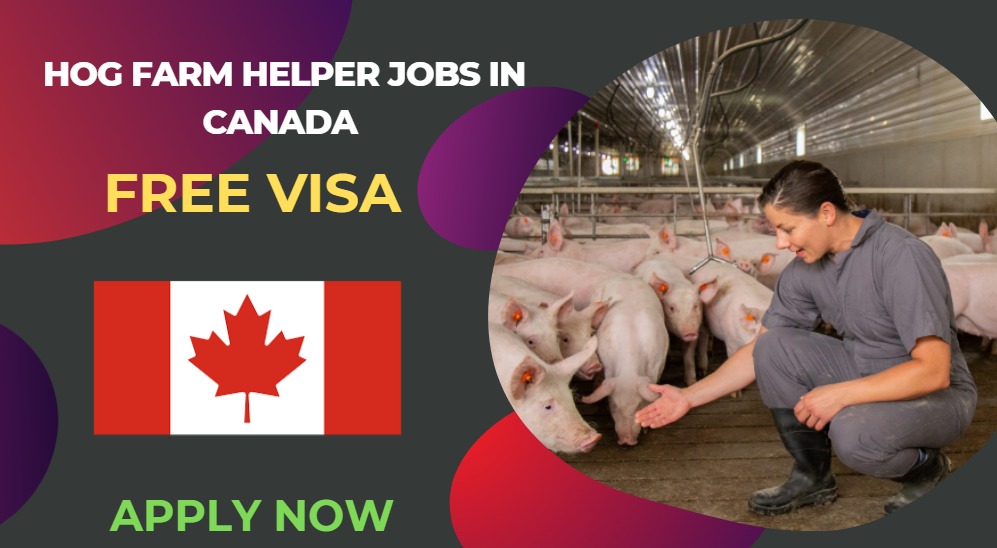
A Hog Farm Helper (often listed as “Farm Worker, Hogs” or “Swine Herdsperson”) is an entry-level position responsible for the daily care and management of pigs. These jobs are always on-site at rural farms—there is no remote option . You will be working directly with the animals in barns, handling feeding, cleaning, and health monitoring.
Daily Duties: What Will You Actually Do?
While tasks vary by farm size (e.g., farrow-to-finish vs. feeder operations), most job postings share a core set of responsibilities .
Animal Care & Feeding
Feed and tend to animals according to schedules.
Monitor water lines, air flow, and barn temperature.
Check feed inventory and report needs.
Health & Treatment
Monitor animal health and detect diseases.
Administer medications and iron.
Perform piglet processing: clipping needle teeth, docking tails, and castration.
Assist with weaning and breeding supervision.
Cleaning & Biosecurity
Clean stables, pens, and barnyards.
Disinfect barns to prevent disease spread.
Follow strict biosecurity protocols (showering in/out, wearing farm-specific clothing).
Record Keeping
Write daily progress reports.
Maintain livestock performance records.
Salary Expectations and Hours
Wages vary by province and experience level, but here is the current pay range from actual job postings:
Entry-Level/Trainee: $16.00 to $17.60 per hour .
Experienced Worker: $19.00 to $22.00 per hour .
High-End/Specialized: Up to $25.00 per hour for complex roles (e.g., Dairy & Hog combined) .
Hours: Expect full-time work. Most postings require 40 to 55 hours per week. Be prepared for weekend and holiday work—animals need care 7 days a week .
Are You a Good Fit? Physical and Personal Requirements
This job is not for everyone. Employers look for specific traits:
Physical Capabilities:
Physically demanding: You will be on your feet, bending, crouching, and kneeling.
Handling heavy loads: Feed bags and equipment can be heavy.
Fast-paced environment: You need to keep up with the production schedule .
Sound discrimination: You must be able to hear distressed animals or equipment issues .
Personal Suitability:
Reliability and Flexibility: You must show up on time and adapt to changing needs.
Team player: You will work with other farm staff.
Attention to detail: Missing a sick pig or a broken water line can have serious consequences .
Do You Need Experience? (Spoiler: Not always!)
Here is the good news for newcomers: Many employers are willing to train.
No experience required: Several postings explicitly state “Will train” or “Experience an asset” .
Preferred experience: Some specialized roles (like Herdsperson) ask for 1–3 years of livestock experience .
Education: Most jobs do not require a high school diploma, though some larger corporate farms prefer it .
Immigration and Hiring Programs
Canada is actively recruiting foreign workers for hog farms. You will frequently see two terms in job postings:
LMIA (Labour Market Impact Assessment): Some employers have approved LMIAs, meaning they are legally allowed to hire foreign workers because no Canadians were available for the job .
Support for Newcomers: Many farms offer diversity training, help with credential recognition, and welcome refugees and temporary residents .
Note: Employers listed in recent job banks accept applications from Canadian citizens, permanent residents, AND those without a valid work permit (though getting hired usually triggers a work permit process).
Where Are the Jobs Located?
Hog farms are located in rural areas. You must be willing to relocate.
Ontario (ON): Elmwood, Dutton, Kincardine .
Manitoba (MB): Roblin, Bowsman, Swan Lake .
Quebec (QC): Saint-Albert (Seasonal positions available) .
Alberta (AB): General postings available for Swine Technicians .
Housing: Many farms in remote areas offer staff accommodation or provide transportation because housing is hard to find locally .
How to Apply for Hog Farm Helper Jobs
Ready to get started? Follow these steps:
Check Job Bank: The Government of Canada’s Job Bank (jobbank.gc.ca) is the primary source. Search for “farm worker, hogs” .
Prepare for a Criminal Record Check: Many employers require one for insurance/security purposes .
Get Your Resume Ready: Even without farm experience, highlight physical labor, reliability, and ability to work weekends.
Apply Directly: Most postings direct you to apply via email or the employer’s website. Look for “How to apply” on the job page.
Conclusion
Hog farm helper jobs in Canada offer a stable, entry-point career into the agricultural industry. The work is hard—expect mud, early mornings, and heavy lifting—but the barriers to entry are low. With wages rising and employers offering training and even housing, this is a viable path for local job seekers and international applicants alike.
If you are organized, physically fit, and don’t mind getting your hands dirty, Canada’s hog farms are hiring. Check the Job Bank today for the latest vacancies in your province.