
Dairy Farm Worker Jobs in UK: In the rolling green countryside of Britain, from the misty valleys of Wales to the flatlands of East Anglia, a quiet but crucial workforce keeps the nation’s largest agricultural sector alive: the dairy farm worker.
Advertisement
With the UK dairy industry producing over 12 billion litres of milk annually, the demand for skilled and semi-skilled labour on farms has never been more consistent. However, a combination of post-Brexit labour shortages, an aging domestic workforce, and the departure of EU workers has left thousands of vacancies unfilled. For job seekers—both local and international—this gap presents a tangible opportunity.
Table of Contents
Dairy Farm Worker Jobs in UK
The Reality of the Role: It’s Not Just Milking
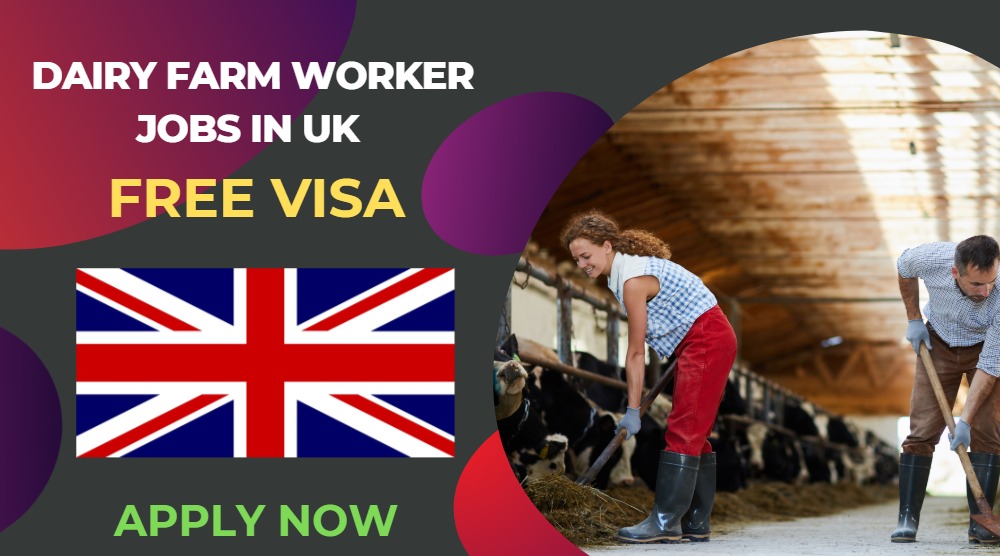
Contrary to the romanticised image of a farmer with a three-legged stool, modern dairy work is a blend of traditional animal husbandry and cutting-edge technology.
A typical day for a dairy farm worker includes:
Milking Operations: Working with rotary or herringbone parlours, often two to three times per day (starting as early as 4:00 AM).
Stockmanship: Monitoring herd health, identifying lameness or mastitis, and assisting with calving.
Feeding & Bedding: Operating machinery to mix feed (Total Mixed Ration) and spread straw or sand for cubicles.
Maintenance: Cleaning parlours, fixing fencing, and troubleshooting automated milking robots (used on 30% of UK farms).
Youngstock Care: Feeding calves and managing heifer pens.
The hours are long. Most positions require 45 to 55 hours per week, with weekend and bank holiday work being mandatory. Cows do not observe Christmas Day.
Salary and Compensation
Pay rates have risen significantly due to labour shortages. As of 2025:
Entry-Level/General Worker: £10.50 – £12.50 per hour (often tied to National Minimum Wage for under-23s, though many farms pay above).
Experienced Stockman: £13.00 – £16.00 per hour.
Herd Manager: £30,000 – £40,000 per annum plus accommodation.
The “Hidden Wage” – Accommodation: Unlike urban jobs, the vast majority of dairy roles offer tied accommodation (a farm cottage or mobile home) as part of the package. Rent is typically deducted at a minimal rate (£50-£100 per week) or provided free. This is the single biggest financial perk, allowing workers to save 70% of their income.
Where Are the Jobs?
The Dairy Belt of the UK offers the highest density of roles:
South West England (Devon, Cornwall, Somerset): The heart of UK dairy, with smaller family farms.
Cumbria & North West (Lake District): Large-scale hill farms and lowland units.
Cheshire & Staffordshire: Mid-sized intensive units.
Scotland (Dumfries & Galloway, Ayrshire): Many large, modern robotic farms.
Wales & Northern Ireland: Mixed systems requiring versatile workers.
Who Is Hiring? (Visa Sponsorship)
This is the critical question for non-UK residents. Since Brexit, free movement ended. However, there are routes:
Seasonal Worker Visa (Temporary): Allows workers from non-EU countries (e.g., Philippines, Nepal, Uzbekistan) to work for up to 6 months on poultry or dairy. This is common for harvest and winter housing.
Skilled Worker Visa (Long-term): To sponsor this, a farm must be a licensed sponsor. True skilled dairy jobs (Herd Manager or AI Technician) qualify, but general labourers rarely do.
The Reality Check: Most routine “dairy farm worker” jobs do not meet the salary or skill threshold for permanent Skilled Worker visas. Farmers prefer to hire applicants who already have the Right to Work (UK citizens, Irish citizens, or those with settled or pre-settled status under the EU Settlement Scheme).
If you need visa sponsorship, target large corporate farms (e.g., Arla’s farmer-owners, Muller’s direct suppliers) or specialist recruitment agencies like ProAgri or De Lacy Executive.
Pros and Cons
| Pros | Cons |
|---|---|
| Low cost of living (free/cheap rent) | Anti-social hours (dawn starts, late finishes) |
| Outdoor, active work (no desk) | Physically demanding (back strain, cold hands) |
| Strong job security (cows always need milking) | Isolation (nearest town can be 10+ miles away) |
| Opportunity to learn robot tech/fertility skills | Weather dependent (rain, snow, heat) |
How to Apply
Polish your CV for agriculture: Emphasise tractor driving, calving experience, and any BASIS or NEBOSH certificates.
Use niche job boards: Don’t rely on Indeed. Use AgriFJ, FarmBusiness, The Farming Forum, and Lantra.
The “Housing” question: When applying, state clearly if you require accommodation or have your own.
Be ready for a trial: Most farmers will ask you to work a free or paid trial day (or weekend) before offering a contract. This is standard in the industry.
The Verdict
Dairy farm work in the UK is not a “gap year” adventure—it is serious, dirty, rewarding graft. For those who love animals, hate traffic jams, and can handle 4:30 AM alarms, it offers a stable career path with minimal living costs.
However, if you require full visa sponsorship for a basic milking role, you will face fierce competition. Your best bet is to target robotic dairy technician roles or apply via the Seasonal Worker route to get a foot in the door.
Disclaimer
This job information is shared for educational and informational purposes only. Any discussion of visa categories is based on general immigration laws and publicly available information.