
Factory machine operator jobs in Canada are good opportunities for foreign workers, especially those who don’t have a university degree but have practical skills, technical knowledge, or hands-on experience. Many Canadian employers hire through LMIA-based work permits when they cannot find qualified local workers.
Advertisement
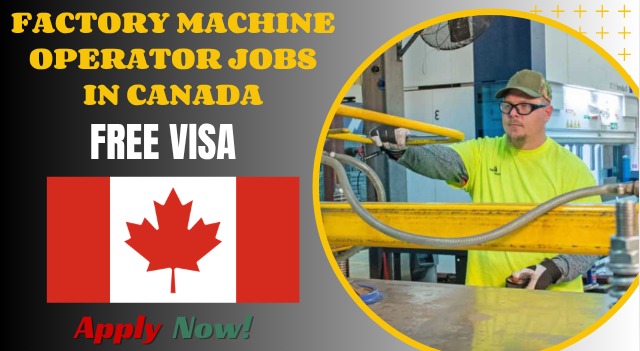
This guide explains job duties, eligibility, salaries, visa options, and how to apply in clear and simple English.
Advertisement
Table of Contents
Advertisement
What Is a Factory Machine Operator Job?
A factory machine operator works with manufacturing equipment, production lines, and automated systems to produce goods in factories. These jobs are common in:
Food and beverage processing
Automotive parts manufacturing
Packaging and assembly plants
Metal fabrication
Plastic and textile manufacturing
Typical duties include:
Setting up and operating machines
Monitoring production quality
Adjusting machine settings
Basic cleaning and maintenance
Recording output and reporting issues
Observing safety procedures
These jobs rely on technical skill and reliability, not a degree.
Is a Degree Required?
No.
Factory machine operator jobs do not require a university degree.
Employers look for:
Technical or vocational training (helpful but not essential)
Work experience with machines or production lines
Ability to learn and follow procedures
Good teamwork and safety awareness
Many employers provide on-the-job training for specific equipment.
Why Employers Use LMIA for These Jobs
LMIA (Labour Market Impact Assessment) is a document that lets Canadian employers sponsor foreign workers when there aren’t enough Canadian workers available.
Employer gets LMIA → You get work permit
It proves that hiring a foreign worker will not negatively affect the Canadian labour market.
Once an employer has a positive LMIA, you can apply for a Canada work permit tied to that job.
Visa Options
LMIA-Based Work Permit (Most Common)
Employer offers job and sponsors you
Employer applies for LMIA
You apply for work permit using LMIA and job offer
Permit is usually employer-specific
This is the standard route for factory machine operator jobs.
Provincial Nominee Programs (PNPs)
Some provinces include manufacturing occupations in demand lists. If nominated:
You get extra points under Express Entry
You might get a work permit + fast path to PR
PNP routes vary by province and labour needs.
Eligibility Requirements
To qualify for a factory machine operator job with an LMIA work permit:
✔ Valid passport
✔ Job offer from a Canadian employer
✔ Employer obtains positive LMIA
✔ Ability to perform machine operation tasks
✔ Basic English or French communication (helps work performance)
✔ Clean criminal record & medical clearance
No degree is required — skill and willingness to learn matter most.
Salary Expectations (2026 Estimates)
Wages vary by province and industry, but typical ranges are:
Entry-level machine operator: CAD $17 – $22 per hour
Experienced operator: CAD $22 – $28 per hour
Supervisory / specialised operator: CAD $28 – $35+ per hour
Full-time positions often include benefits like health coverage for eligible workers.
Working Conditions
Factory machine operator jobs usually involve:
Shift work (day, evening, night)
Wearing safety gear (helmets, gloves, boots)
Standing, monitoring, and adjusting machines
Following safety protocols
Physical readiness and attention to detail are important.
How to Apply for Jobs with LMIA Sponsorship
Step-by-Step Process
Prepare a Canada-style Resume
Focus on machine operation, tools used, output results
Search for Employers Offering Sponsorship
Look for listing phrases like LMIA support or work permit provided
Submit Your Application
Email or online application with resume
Attend Interview (if required)
Many employers interview by phone/video
Receive Job Offer
Employer provides an official job offer letter
Employer Applies for LMIA
Employer submits LMIA application
Apply for Work Permit
Submit visa application using LMIA and job offer
Travel and Begin Work
Start work after visa approval
Where These Jobs Are Common
Factory machine operator jobs are common in regions with strong manufacturing sectors:
Ontario – Toronto, London, Windsor
Quebec – Montreal, Quebec City
Alberta – Calgary, Edmonton
British Columbia – Vancouver, Lower Mainland
Manitoba & Saskatchewan – Winnipeg and rural plants
Important Tips for Applicants
✔ Be specific about your machine skills on your resume
✔ Highlight any equipment or tools you’re familiar with
✔ Prepare for shift-related work schedules
✔ Avoid employers charging fees for job offers
✔ Improve basic language skills for safety and communication
Final Words
Factory machine operator jobs in Canada with LMIA visa sponsorship are a realistic and accessible option for foreign workers in 2026, even without a degree. These roles offer:
Practical entry into the Canadian workforce
Competitive wages
Valuable work experience
Pathways that could lead to longer-term opportunities
With a genuine job offer and employer support, you can work legally in Canada and build a strong career in manufacturing.
Disclaimer
This job information is shared for educational and informational purposes only.
Any discussion of visa categories is based on general immigration laws and publicly available information.