
Caregiver Jobs in Spain: Spain has one of the highest life expectancies in the world (83.5 years) and a rapidly ageing population. Millions of elderly Spaniards need assistance with daily living—bathing, dressing, medication reminders, companionship, and housekeeping. And there are not enough Spanish workers to fill the demand. The result? Caregiver jobs in Spain are abundant and increasingly open to foreigners.
Advertisement
For compassionate, patient, and physically fit individuals, caregiving offers stable employment, often with live-in accommodation (saving hundreds of euros per month in rent), legal contracts, and in some cases, pathways to residency through Spain’s Ley de Dependencia (Dependency Law) and family-based visa arrangements.
Table of Contents
Caregiver Jobs in Spain
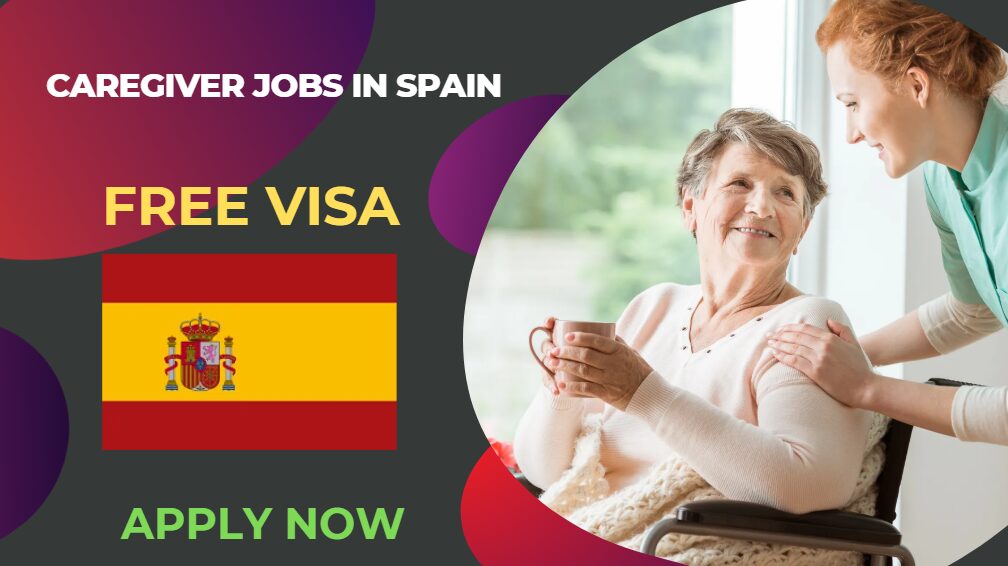
This guide covers everything: what caregivers do in Spain (home care, residential facilities, hospitals), pay rates (€1,000–€1,600 net/month + free room for live-in roles), visa options for EU and non-EU citizens (including the unique “caregiver visa” for non-EU citizens), how to find jobs without speaking Spanish (though Spanish is highly recommended), and exactly how to land your first caregiving role in Spain.
What Are Caregiver Jobs in Spain? (Definition & SEO Keywords)
A caregiver (cuidador/a or auxiliar de ayuda a domicilio) provides non-medical assistance to elderly people, people with disabilities, or people recovering from illness. You help with personal care, mobility, meals, medication reminders, and companionship. You are not a nurse (no medical procedures like injections or wound care).
Other common titles in Spain:
Cuidador/a de Mayores (Elderly Caregiver)
Auxiliar de Ayuda a Domicilio (Home Care Assistant)
Asistente Personal para Personas con Discapacidad (Personal Assistant for People with Disabilities)
Cuidador/a Interno/a (Live-in Caregiver – most common for foreigners)
Acompañante de Mayores (Elderly Companion – less physical care)
Gerocultor/a (Geriatric Care Assistant – more medical, requires training)
Asistente de Enfermería (Nursing Assistant – requires certification)
What you are NOT: A registered nurse (enfermero/a – requires university degree), a physiotherapist, or a doctor.
Critical distinction: In Spain, live-in caregiving (cuidador/a interno/a) is very common. The caregiver lives in the elderly person’s home (or in a separate room in the family home). You have a private room, meals are provided, and your accommodation and food are deducted from your salary or provided as part of the compensation package. This is how many foreigners, especially from Latin America and the Philippines, enter the Spanish labour market.
Core Duties: What Caregivers Actually Do in Spain
Caregiving is not just “keeping someone company.” It is physical, emotional, and often demanding work.
Typical Responsibilities (Home Care Setting):
| Category | Core Duties |
|---|---|
| Personal Care (higiene personal) | Bathing (shower or bed bath), dressing and undressing, toileting (including changing incontinence pads), oral hygiene (brushing teeth, denture care), grooming (shaving, hair brushing). |
| Mobility (movilidad) | Helping the person stand up from bed or chair, walking with them (using walker or cane), transferring from bed to wheelchair, using a hoist (if trained – requires certification). |
| Meals (alimentación) | Planning and cooking meals (following dietary restrictions: low salt, diabetic, soft foods), feeding the person if they cannot feed themselves, ensuring adequate hydration. |
| Medication (medicación – reminders only) | Reminding the person to take their pills (at correct times), opening pill bottles, logging what was taken. You cannot administer injections or decide dosages – that is a nurse’s job. |
| Housekeeping (tareas del hogar) | Light cleaning (kitchen, bathroom, living areas), laundry and ironing, changing bed linens, grocery shopping. |
| Companionship (compañía) | Conversation, reading aloud, playing cards or board games, accompanying to doctor’s appointments, accompanying on short walks. |
| Night supervision (supervisión nocturna) | For elderly with dementia or fall risk: checking on them during the night, helping them to the bathroom, preventing wandering. |
Where Caregivers Work in Spain:
| Setting | % of Jobs | Live-in Option? | Spanish Required? | Notes |
|---|---|---|---|---|
| Private home (family hires you directly) | 60% | Yes (most common) | Yes – essential | Most live-in roles. Family may speak only Spanish. |
| Residential aged care home (residencia de ancianos) | 25% | No (you commute) | Yes – required | Spanish required to communicate with colleagues and residents. |
| Day centre (centro de día) | 10% | No | Yes – required | Residents go home at night. |
| Private agency (empresa de ayuda a domicilio) | 5% | Rare | Yes | Agency assigns you to different homes. |
For non-Spanish speakers: Your best option is a live-in role with an English-speaking family (British, Irish, American expats living in Spain) or a family that specifically wants an English-speaking caregiver (for language exposure for the elderly person). These jobs exist but are less common. Most caregiving in Spain requires Spanish.
Why Caregiver Jobs Are Available for Foreigners (Market Demand – Deep Search)
Spain’s demographic crisis is severe: low birth rates, high life expectancy, and a healthcare system stretched thin. Families are desperate for caregivers.
Hard data (2024–2026):
| Indicator | Statistic | Source |
|---|---|---|
| Population over 65 years | 9.7 million (20% of population) | INE (Spanish Statistics Institute) |
| People over 80 years | 3 million+ | INE |
| Elderly people needing care | 2.5+ million | IMSERSO (Institute for Elderly & Social Services) |
| Formal caregivers (registered) | 400,000 | Ministerio de Derechos Sociales |
| Unfilled caregiver positions | 50,000+ | UGT (trade union) |
| Foreign-born caregivers | 30%+ (primarily Latin America, Philippines, Romania) | Industry estimate |
| Spanish families willing to hire foreign caregivers | 70%+ | Industry surveys |
The result: Caregiving is the most reliable job for many immigrants in Spain. Women from Colombia, Venezuela, Peru, Bolivia, Dominican Republic, Philippines, and Romania dominate the sector. English speakers (British, Irish, American) are a small but growing niche, especially among expat families.
Who hires foreign caregivers in Spain:
| Employer Type | Foreign Workers? | English Friendly? | Typical Locations | Live-in Available? |
|---|---|---|---|---|
| Spanish families (direct hire) | Yes – very high | No – Spanish required | Nationwide | Yes – most common |
| Expat families (British, Irish, American, German) | Yes – very high | Yes – English only often fine | Costa del Sol, Costa Blanca, Balearic Islands, Barcelona, Madrid | Yes |
| Residential aged care homes | Yes – medium (need Spanish and certification) | No – Spanish required | Nationwide | No |
| Agencies (home care) | Yes – high (need Spanish) | No – Spanish required | Major cities | Occasionally |
| Private families (via word of mouth) | Yes – very high | Varies | Nationwide | Yes – most common route |
Requirements for Caregiver Jobs (What You Need)
Requirements vary significantly between “live-in caregiver for a Spanish family” (lower requirements) and “residential aged care home” (higher requirements). We’ll focus on the live-in caregiver route, which is most accessible for foreigners.
Essential (Non-Negotiable for Live-in Roles):
| Requirement | Details | Notes |
|---|---|---|
| Valid work permit for Spain | EU citizens: automatic. Non-EU: need visa (see section below). | Most important. Cannot work legally without this. |
| Basic Spanish (for Spanish families) | At least A2 (intermediate low). You need to understand “¿Necesitas ir al baño?” (“Do you need to go to the bathroom?”). For expat families, English is enough. | Spanish families will not hire you if you don’t speak Spanish. Expat families are the exception. |
| Patience and empathy | You will be working with people who may have dementia, incontinence, mobility issues, or cognitive decline. | The job is emotionally demanding. |
| Physical fitness | Lifting, transferring, bathing, standing, walking – often with someone who cannot support their own weight. | Back injuries are common. Learn proper lifting techniques. |
| NIE (Foreigner Identification Number) | Required for any legal work. | Your employer will help or you can get it yourself. |
| Social Security number | Once hired, employer registers you. | Required for legal employment. |
| No criminal record (for elderly care) | Required for working with vulnerable people (older adults). | You’ll need a criminal record check from your home country (apostilled and translated). |
Highly Desirable (Massively Increases Your Chances & Pay):
| Requirement | Why It Helps |
|---|---|
| Previous caregiving experience | Even caring for a grandparent or relative counts. |
| EU passport | Instant hiring (no visa paperwork for family). |
| First Aid & CPR certificate | Shows professionalism and preparedness. |
| Dementia/Alzheimer’s training | Very valuable – most elderly care involves dementia. |
| Driver’s licence | Some families need you to drive the elderly person to appointments. |
| Availability for live-in (6+ days/week) | Families prefer full-time live-in (you live there 5-6 days/week, have 1-2 days off). |
| References (from previous caregiving) | Families want to speak to previous employers. |
| Basic cooking skills | You’ll need to prepare meals (often with dietary restrictions). |
What You Do NOT Need (for Live-in Roles):
❌ No formal nursing qualification
❌ No caregiving certificate (though it helps)
❌ No Spanish (for expat families only)
For Residential Aged Care Homes (Requirements are Higher):
If you want to work in a Spanish residencia de ancianos, you typically need:
Técnico en Atención a Personas en Situación de Dependencia (official Spanish qualification – 1-2 years of study)
OR Certificado de Profesionalidad de Atención Sociosanitaria a Personas en el Domicilio
Fluent Spanish (C1 level)
Valid work permit
For most foreigners without Spanish qualifications, live-in home care is the most realistic entry point.
Pay Rates for Caregivers in Spain (2026)
Pay varies dramatically between live-in (lower cash salary but free room and board) and live-out (higher cash salary but you pay rent and food).
Live-in Caregiver (Cuidador/a Interno/a) – Most Common for Foreigners:
| Arrangement | Cash Salary (€/month) | Free Room Value | Free Meals Value | Total Package Value |
|---|---|---|---|---|
| Live-in, full-time (6 days/week) | €900 – €1,200 | €300 – €600 | €150 – €250 | €1,350 – €2,050 |
| Live-in, full-time (7 days/week – no days off) | €1,100 – €1,500 | €300 – €600 | €150 – €250 | €1,550 – €2,350 |
| Live-in, part-time (weekends only) | €50 – €80/day | €0 (you don’t live there full-time) | €0 | €50 – €80 |
Live-out Caregiver (No Accommodation):
| Role | Hourly Rate (€) | Monthly (full-time, 40h/week) |
|---|---|---|
| Home care (via agency) | €8 – €12 | €1,300 – €2,100 gross |
| Private hire (direct with family) | €9 – €15 | €1,500 – €2,600 gross |
| Residential aged care home | €9 – €13 | €1,500 – €2,200 gross |
Realistic Example (Live-in, 6 days/week, €1,000 cash + free room & board):
| Item | Value (€) | Notes |
|---|---|---|
| Cash salary (net) | €1,000 | After tax (if registered legally) |
| Free room (market value) | €400 | You would pay this in rent |
| Free meals (market value) | €200 | You would pay this for food |
| Total economic value | €1,600 | Your effective income |
| Savings (if careful) | €600 – €900 | Most of your cash salary can be saved (no rent, minimal food cost) |
Savings potential: Live-in caregivers can save €500–€1,000 per month because they have almost no living expenses. This is why many foreigners take live-in roles despite the low cash salary.
Additional Benefits (Some Families):
| Benefit | Notes |
|---|---|
| Transport paid | Bus/train tickets for days off |
| Mobile phone | Some families provide a phone for emergencies |
| Spanish lessons | Some families offer to pay for classes |
| Christmas bonus | Extra month’s pay (common in Spain – “paga extra”) |
| Paid holidays | 30 days per year (pro-rated) |
Work Visas & Permits for Caregivers (Critical Section)
This is the #1 question. Here is the detailed answer for EU, UK, and non-EU citizens.
For EU Citizens (Irish, German, French, Romanian, etc.):
| Requirement | Status |
|---|---|
| Visa needed? | ❌ No |
| Work permit needed? | ❌ No |
| Registration required? | ✅ Yes – need NIE |
How to work as an EU citizen caregiver:
Travel to Spain.
Find a caregiver job (expat families, Spanish families with basic English, or learn Spanish).
Get your NIE.
Family/employer registers you for Social Security.
Start work.
Note for Romanian citizens: Full EU rights. Many Romanian caregivers work in Spain.
For Latin American Citizens (Colombia, Venezuela, Peru, Bolivia, Dominican Republic, etc.):
This is the largest group of foreign caregivers in Spain. There are special agreements for Latin Americans.
| Requirement | Status |
|---|---|
| Visa needed? | ✅ Yes (for stays over 90 days) |
| Pathway to residency? | ✅ Yes – through “arraigo social” or “arraigo laboral” |
Common pathways for Latin American caregivers:
| Pathway | Details | Feasibility |
|---|---|---|
| Visado de trabajo (work visa) | Employer sponsors you (family or agency). Requires proof of no EU citizen available. | Medium – requires a family willing to sponsor. |
| Student visa + work | Enrol in a course (Spanish, caregiving). Work 30 hours/week. Later convert to work visa. | Medium – expensive. |
| Arraigo social (social roots) | After 3 years of living in Spain (even undocumented), you can apply for residency if you have a job offer, family ties, or social integration. | High – this is how many Latin Americans regularise their status. |
| Arraigo laboral (work roots) | After 2 years of working (even undocumented), you can apply for residency. | High – common pathway. |
Special note for citizens of former Spanish colonies (Philippines, Equatorial Guinea, etc.): You can apply for Spanish citizenship after 2 years of legal residency (instead of 10 years for others). This is a huge advantage.
Reality check for Latin American caregivers: Many start by entering Spain on a tourist visa (90 days), finding a live-in caregiving job (often undocumented), and then regularising their status after 2-3 years through arraigo. This is risky but common. We do not recommend working without papers – but it is important to know that this pathway exists and is widely used.
For legal, above-board entry: A family can sponsor you for a work visa. The family must prove they cannot find a suitable caregiver in Spain or the EU. This is possible but bureaucratic. Consult a Spanish immigration lawyer.
For Filipino Citizens:
The Philippines has a special historical relationship with Spain. Filipinos can apply for Spanish citizenship after 2 years of legal residency (same as Latin Americans).
Pathways for Filipino caregivers:
Work visa sponsorship by a Spanish family (rare but possible).
Student visa (study Spanish or caregiving) + part-time work (30 hours/week).
Arraigo (after 3 years of residency, undocumented or documented).
Reality check: Many Filipino caregivers in Spain work in live-in roles, often initially undocumented, then regularise. The Filipino community in Madrid and Barcelona is large and supportive.
For Working Holiday Visa Holders (Australia, Canada, New Zealand, Japan, South Korea):
Spain has WHV agreements with several non-EU countries.
| Country | Age Limit | Work Rights | Caregiver Feasibility |
|---|---|---|---|
| Australia | 18–30 (35 for some) | Full-time work allowed | ✅ Possible – but you need Spanish or find expat family |
| Canada | 18–35 | Full-time work allowed | ✅ Possible |
| New Zealand | 18–30 | Full-time work allowed | ✅ Possible |
| Japan | 18–30 | Full-time work allowed | ⚠️ Limited (few Japanese families in Spain) |
| South Korea | 18–30 | Full-time work allowed | ⚠️ Limited |
| United Kingdom | No WHV with Spain | N/A | ❌ No |
How WHV works for caregiving:
Apply for WHV from your home country.
Travel to Spain. Focus on expat areas (Costa del Sol, Costa Blanca, Mallorca, Ibiza).
Look for English-speaking families needing a caregiver (British/Irish/American retirees).
Work legally for up to 12–24 months.
Best for WHV holders: Target British expat communities on the Costa del Sol (Marbella, Fuengirola, Benalmádena), Costa Blanca (Benidorm, Alicante, Torrevieja), and Mallorca. Many elderly British retirees need English-speaking caregivers.
For UK Citizens (Post-Brexit):
This is difficult but possible through the Student Visa pathway.
| Requirement | Status |
|---|---|
| Visa needed? | ✅ Yes (for stays over 90 days) |
| Work permit needed? | ✅ Yes (employer must sponsor – very rare for caregiving) |
Legal pathways for UK citizens:
| Pathway | Feasibility | Notes |
|---|---|---|
| Student Visa + part-time work | ✅ Medium – Realistic | Enrol in Spanish course (20 hours/week). Work 30 hours/week legally (caregiving). Cost: €1,000–€2,000 for course. Cannot work full-time (30 hours max). |
| Family sponsorship (work visa) | ⚠️ Low | Spanish family would need to prove no EU citizen available. Rare. |
| Self-employment (autónomo) as caregiver | ⚠️ Possible | You would need to register as self-employed and find private clients. Complex. |
| Work illegally (cash in hand) | ⚠️ Risky | Deportation, Schengen ban, no healthcare, no labour rights. |
Reality check for UK citizens: The Student Visa is your most realistic legal pathway. Enrol in a Spanish language course (20 hours/week). You can work 30 hours/week as a caregiver. This is expensive but legal.
Alternative: Focus on expat families (British retirees) who may be more flexible, but you still need a visa.
For US Citizens (No WHV):
| Requirement | Status |
|---|---|
| Visa needed? | ✅ Yes |
| Pathway? | ❌ No practical pathway for entry-level caregiving |
Options for US citizens:
Student Visa (study Spanish or caregiving) + part-time work (30 hours/week). Expensive but possible.
Non-Lucrative Visa (requires €30,000+ savings) – cannot work.
Digital Nomad Visa – not for caregiving.
Reality check: There is no direct work visa for caregiving for US citizens. Student Visa is your only practical option.
Do You Need to Speak Spanish to Be a Caregiver in Spain?
Short answer: Yes for Spanish families. No for expat families (British, Irish, American).
Where Spanish is Required:
| Employer Type | Spanish Needed? | Level Required |
|---|---|---|
| Spanish family (direct hire) | ✅ Yes | Intermediate (B1) – you need to communicate about medication, toileting, emergencies |
| Residential aged care home | ✅ Yes | Advanced (B2/C1) – you need to talk to colleagues, read care plans |
| Spanish agency | ✅ Yes | Intermediate (B1) |
| Spanish day centre | ✅ Yes | Intermediate (B1) |
Where English is Enough:
| Employer Type | English Needed? | Locations |
|---|---|---|
| British expat family | ✅ Yes (native English) | Costa del Sol, Costa Blanca, Mallorca, Ibiza |
| Irish expat family | ✅ Yes | Same as above |
| American expat family | ✅ Yes | Barcelona, Madrid, expat communities |
| German expat family (sometimes English) | ⚠️ German + English | Mallorca (many German retirees) |
Spanish You MUST Learn (Even for English-Speaking Families, You’ll Need Basics):
| English | Spanish | Pronounced |
|---|---|---|
| Hello | Hola | OH-la |
| Good morning | Buenos días | BWEH-nos DEE-as |
| How are you? | ¿Cómo está? | KOH-moh es-TAH |
| Do you need to go to the bathroom? | ¿Necesita ir al baño? | neh-seh-SEE-tah eer al BAH-nyo |
| Let’s eat | Vamos a comer | BAH-mos ah koh-MEHR |
| Take your medicine | Tome su medicina | TOH-meh soo meh-dee-SEE-nah |
| Help! | ¡Ayuda! | ah-YOO-dah |
| Do you want water? | ¿Quiere agua? | KYEH-reh AH-gwah |
| I am going to bathe you | Voy a bañarle | boy ah bah-NYAR-leh |
| Don’t worry | No se preocupe | no se preh-oh-KOO-peh |
| I’ll be right back | Vuelvo enseguida | VWEL-vo en-seh-GEE-dah |
Recommendation: Learn at least A2 Spanish (elementary) before applying. Use Duolingo, take a 4-week intensive course in Spain, or hire a tutor online. It will double your job offers and triple your salary.
Where Are the Best Locations for Caregiver Jobs in Spain?
For English-Speaking Caregivers (Expat Families):
| Region | Expat Community | Demand for English Caregivers | Cost of Living (for your days off) | Notes |
|---|---|---|---|---|
| Costa del Sol (Málaga, Marbella, Fuengirola, Benalmádena) | Very large (British, Irish, German) | High | Medium–High | Best for English speakers |
| Costa Blanca (Benidorm, Alicante, Torrevieja) | Very large (British) | High | Low–Medium | Cheap living, many retirees |
| Balearic Islands (Mallorca, Ibiza) | Large (British, German) | High | High (except staff accommodation) | Beautiful, seasonal |
| Canary Islands (Tenerife, Gran Canaria) | Large (British, German) | High | Medium | Year-round warm weather |
| Barcelona | Medium (international) | Medium | High | Expat families, but fewer elderly |
| Madrid | Medium (international) | Medium | High | Embassy and business expats |
For Spanish-Speaking Caregivers (Spanish Families):
| Region | Demand for Caregivers | Cost of Living | Notes |
|---|---|---|---|
| Madrid | Very high | High | High salaries, high rent |
| Barcelona | Very high | High | High salaries, high rent |
| Valencia | High | Medium | |
| Seville | High | Low–Medium | |
| Zaragoza | Medium | Low | |
| Bilbao | Medium | Medium |
Best for saving money (low cost of living + live-in role):
Costa Blanca (Benidorm area) – cheap rent on your days off, many British families
Murcia region – lower cost of living
Zaragoza – low rent, but fewer English-speaking families
How to Find Caregiver Jobs in Spain (Actionable Steps)
Step 1: Get Your Paperwork in Order (Before You Apply)
EU citizens: Passport, NIE.
WHV holders: Get your visa approved before you arrive.
Latin Americans / Filipinos: Consult a Spanish immigration lawyer about arraigo pathways or work visa sponsorship.
Everyone: Get a criminal record check from your home country (apostilled and translated into Spanish). Many families require it.
Step 2: Learn Spanish (If Targeting Spanish Families)
Minimum A2 (elementary) – 2-3 months of daily study.
Use Duolingo, Babbel, or hire a tutor on italki.
Take a 2-week intensive course in Spain (€200–€500).
Step 3: Prepare Your CV (in Spanish)
CV template for Spain (caregiver focus):
[Your Name]
Teléfono: [Spanish mobile] | Correo: [email] | Nacionalidad: [Colombiana/Filipina/Rumana/etc.]PERFIL
Cuidadora con [X] años de experiencia en el cuidado de personas mayores. Paciente, responsable y con habilidades para la movilización, higiene personal y compañía. Busco trabajo como cuidadora interna o externa.EXPERIENCIA LABORAL
Cuidadora de Mayores – [Family Name] – [Dates] – [City]
Atención a persona mayor con demencia: movilización, higiene, alimentación, administración de medicamentos (recordatorio).
Acompañamiento a citas médicas y actividades diarias.
Cocina, limpieza ligera, lavandería.
FORMACIÓN
Curso de Cuidador de Mayores (online – optional)
Primeros Auxilios y RCP (First Aid & CPR)
HABILIDADES
Movilización y transferencias
Atención a personas con Alzheimer/demencia
Cocina (dietas especiales baja en sal/sin azúcar)
Idiomas: [Spanish: advanced, English: intermediate]
DISPONIBILIDAD
Incorporación inmediata
Disponible para vivir interna (live-in) o externa (live-out)
Step 4: Use the Right Platforms
| Platform | Best For | Notes |
|---|---|---|
| Facebook Groups (see below) | Direct family hiring | Best for live-in roles |
| Cuidum (cuidum.com) | Private caregiver matching | Spanish-language platform |
| Cuidar Mayores (cuidarmayores.com) | Spanish families | Spanish required |
| InfoJobs (infojobs.net) | Agencies and residential homes | Search “cuidador” |
| Milanuncios (milanuncios.com) | Private ads (direct families) | Be cautious – some are scams |
| Expat Facebook groups | English-speaking families | Search “Expats in [Costa del Sol]” |
Step 5: Join Facebook Groups (Most Effective for English Speakers)
For English-speaking families (expat retirees):
Search these exact names:
“Expats in Costa del Sol (Jobs & Housing)”
“British Expats in Spain (Caregiver needed)”
“Jobs in Marbella / Fuengirola for English Speakers”
“Mallorca Expats & Jobs”
“Tenerife Jobs for English Speakers”
Post template (English):
“Experienced caregiver looking for live-in or live-out position with an elderly person. I speak English (native) and basic Spanish. Experienced with dementia, mobility assistance, bathing, medication reminders. Available full-time. Can provide references. Based in [Costa del Sol]. Message me for CV.”
For Spanish-speaking families (if you speak Spanish):
Search these exact names:
“Cuidadores de mayores España (empleo)”
“Trabajo de cuidador/a interno/a”
“Cuidadoras para personas mayores – ofertas”
Post template (Spanish):
“Cuidadora con experiencia busca trabajo interno o externo con persona mayor. Disponibilidad inmediata. Ayudo con higiene, movilidad, comidas, compañía. Zona [Madrid/Barcelona/Valencia]. Referencias disponibles. Gracias.”
Step 6: Contact Residential Aged Care Homes (If You Have Spanish & Certification)
If you have the Técnico en Atención a Personas en Situación de Dependencia or relevant experience, apply directly to residencias.
How to find them:
Google “residencia de ancianos [city] + trabajo”
Look for “bolsa de empleo” (job board) on their websites
Walk in with CV (between 10am–12pm)
Step 7: Use Word of Mouth (Once You’re in Spain)
Caregiving in Spain is a community. Once you have one job, ask the family: “¿Conoce a alguien más que necesite una cuidadora?” (“Do you know anyone else who needs a caregiver?”)
Many jobs are never advertised – they are passed from caregiver to caregiver.
Sample Job Ads (Realistic)
Example 1: Live-in Caregiver – British Expat (Costa del Sol)
Title: Live-in Caregiver for Elderly British Lady – Fuengirola, Costa del Sol
Family: British expat, speaks English only
Contract: Full-time live-in (6 days/week, 1 day off)
Pay: €1,100 cash (net) + private room + all meals
Requirements:
English fluent
Basic Spanish helpful but not essential
Experience with elderly care (dementia preferred)
NIE and work permit (or willing to get)
Duties: Bathing, dressing, medication reminders, meals, companionship, light cleaning.
Benefits: Private room with TV, WiFi, 30 days paid holiday (pro-rated), Christmas bonus.
To apply: Join “Expats in Costa del Sol” Facebook group and reply to job post.
Example 2: Live-in Caregiver – Spanish Family (Madrid)
Title: Cuidadora Interna para Persona Mayor – Madrid (Barrio de Salamanca)
Family: Spanish family, speaks Spanish only
Contract: Live-in (Monday–Saturday, Sunday off)
Pay: €1,000 net/month + private room + all meals + transport card
Requirements:
Spanish intermediate (B1)
Experience with Alzheimer’s patients
NIE and Social Security (agency will help)
Duties: Higiene personal, movilización, comida, compañía, salidas al parque.
To apply: Contact Agencia de Cuidadores Madrid.
Example 3: Live-out Caregiver – Residential Home (Barcelona)
Title: Auxiliar de Geriatría – Residencia de Ancianos – Barcelona
Employer: Private aged care home
Contract: Permanent, full-time (40 hours/week), live-out
Pay: €1,400 gross/month + health insurance + 30 days holiday
Requirements:
Spanish fluent (C1)
Técnico en Atención a Personas en Situación de Dependencia (or equivalent)
NIE and work permit
To apply: Apply via InfoJobs or walk in with CV.
Living as a Live-in Caregiver: What to Expect
Typical Daily Schedule (Live-in, 6 days/week):
| Time | Activity |
|---|---|
| 7:00 AM | Wake up (in your private room in the family’s home) |
| 7:30 AM | Help elderly person wake up, use bathroom, wash face, brush teeth |
| 8:00 AM | Prepare breakfast (coffee, toast, juice) |
| 8:30 AM | Administer morning medications (remind, hand over pills) |
| 9:00 AM – 11:00 AM | Clean kitchen, do laundry, tidy living areas |
| 11:00 AM – 12:00 PM | Accompany on walk (or indoor exercises if mobility limited) |
| 12:00 PM – 1:00 PM | Prepare lunch |
| 1:00 PM – 2:00 PM | Lunch, help with feeding if needed |
| 2:00 PM – 4:00 PM | Elderly person naps; you have free time (read, study Spanish, call family) |
| 4:00 PM – 5:00 PM | Afternoon tea, conversation, games |
| 5:00 PM – 6:00 PM | Help with shower or bed bath |
| 6:00 PM – 7:00 PM | Prepare dinner |
| 7:00 PM – 8:00 PM | Dinner |
| 8:00 PM – 9:00 PM | Evenings: watch TV together, listen to music, talk |
| 9:00 PM – 9:30 PM | Help prepare for bed (pyjamas, medication, bathroom) |
| 9:30 PM – 7:00 AM | Elderly person sleeps; you are on call (for night needs – call bell). You sleep in your room (with baby monitor or hearing the call bell). |
Pros and Cons of Live-in Caregiving:
| Pros | Cons |
|---|---|
| Free room and board (save €500–€800/month) | Limited privacy (you live with the family) |
| No commute (your workplace is your home) | On call at night (if elderly person has dementia or falls risk) |
| Build deep relationships with the elderly person | Emotionally draining (especially if person declines or dies) |
| Learn Spanish (if family speaks Spanish) | Loneliness (may be isolated from friends) |
| Stable, long-term work (families want consistency) | Difficult days off (where do you go? often a friend’s house or a cheap hostel) |
| Legal contract + Social Security (if family complies) | Conflict with family members (different expectations) |
Common Interview Questions & Answers
Q: “¿Tienes experiencia con personas mayores?” (“Do you have experience with elderly people?”)
Answer: “Sí. Cuidé a mi abuela durante dos años. Ayudaba con baños, comidas y medicamentos.” (“Yes. I took care of my grandmother for two years. I helped with bathing, meals, and medications.”)
Q: “¿Sabes usar una grúa (hoist)?” (“Do you know how to use a hoist?”)
Answer: “No tengo experiencia con grúas, pero aprendo rápido. He hecho transferencias manualmente.” (“I don’t have experience with hoists, but I learn quickly. I have done manual transfers.”)
Q: “¿Qué haces si la persona se cae?” (“What do you do if the person falls?”)
Answer: “Primero, no entro en pánico. Segundo, llamo a emergencias (112). Tercero, no muevo a la persona hasta que llegue la ayuda, a menos que esté en peligro inmediato.” (“First, I don’t panic. Second, I call emergency (112). Third, I don’t move the person until help arrives, unless they are in immediate danger.”)
Q: “¿Puedes trabajar fines de semana?” (“Can you work weekends?”)
Answer: “Sí. Entiendo que el cuidado es 24/7. Estoy disponible para trabajar cuando la familia me necesite.” (“Yes. I understand that care is 24/7. I am available to work when the family needs me.”)
Q: “¿Cuál es tu situación de visado?” (“What is your visa status?”)
Answer (EU): “Soy ciudadana de la UE. Tengo mi NIE.” (“I am an EU citizen. I have my NIE.”)
Answer (WHV): “Tengo un visado de Working Holiday. Puedo trabajar legalmente.” (“I have a Working Holiday Visa. I can work legally.”)
Answer (Student Visa): “Tengo un visado de estudiante. Puedo trabajar 30 horas por semana.” (“I have a Student Visa. I can work 30 hours per week.”)
Legal Traps for Caregivers (Critical)
Red Flags (Walk away immediately):
| Red Flag | Why It’s a Problem |
|---|---|
| “We’ll pay you cash. No contract.” | Illegal. No Social Security (no healthcare if injured – lifting injuries are common). No pension. No unemployment. |
| “You must work 7 days/week, 12 hours/day for €800.” | Illegal (below minimum wage). Exploitation. |
| “We’ll hold your passport for ‘safety’.” | Illegal in Spain. Never give your passport to an employer. |
| “You’re not an employee, you’re part of the family.” | A common trick to avoid paying taxes and Social Security. You are an employee. |
| No written contract after 1 week | Spanish law requires a written contract from day one. |
Your Legal Rights as a Caregiver in Spain:
| Right | Details |
|---|---|
| Minimum wage | €1,134/month (gross, 14 payments/year). For live-in roles, the value of room and board is NOT deducted from minimum wage (you must be paid at least minimum wage in cash). |
| Maximum working hours | 40 hours/week (overtime must be paid). Live-in caregivers often work more, but overtime is legally required. |
| Paid annual leave | 30 calendar days per year (22 working days) – pro-rated. |
| Sick leave | Paid by Social Security (after waiting period). |
| Rest breaks | 15-minute break for shifts over 6 hours; 30-minute meal break. |
| Days off | At least 1.5 consecutive days per week (typically Saturday afternoon to Monday morning). |
| Night rest period | At least 8 consecutive hours of rest per day (can be interrupted for emergencies, but must be compensated). |
How to Protect Yourself:
Never work without a written contract.
Never work without being registered in Social Security. Ask for proof (informe de vida laboral – you can check online).
Keep copies of your payslips and contract.
Get your NIE before you start (or have proof that you applied).
Know your rights. If a family expects you to work 7 days/week without days off, that is illegal.
What to Do If You Are Exploited:
Labour Inspectorate (Inspección de Trabajo): 901 33 99 99 (call with a Spanish-speaking friend).
Trade unions: UGT and CCOO – they help foreign workers for free.
Your embassy: The British, Irish, Australian, Canadian, and US embassies have consular services.
Pros and Cons (Honest Summary for Foreigners)
✅ Pros:
Live-in accommodation included – save €500–€800/month on rent
Free meals – another €150–€250/month saved
Legal contracts possible (if family cooperates)
Work for British expat families (no Spanish required)
High savings potential (€500–€1,000/month)
Deep, meaningful work – you make a real difference
Pathway to residency (through arraigo or family sponsorship)
❌ Cons:
Low cash salary (€900–€1,200/month – but remember free room & board)
Limited privacy (you live at work)
On call at night (disturbed sleep)
Emotionally demanding (dementia, decline, death)
Physically demanding (lifting, bathing, transfers)
Spanish required for most families (expat families are the exception)
Visa challenges (UK, US citizens have no WHV)
Risk of exploitation (unscrupulous families)
How to Start Today (Checklist)
If you are an EU citizen (Irish, German, French, Romanian, etc.):
Get your NIE (apply at Spanish consulate or police station).
Get a criminal record check (apostilled, translated).
Learn basic Spanish (A2) – use Duolingo or take a course.
Join Facebook groups for English-speaking families (Costa del Sol, Costa Blanca).
Post your availability (be specific: “live-in caregiver available”).
Accept a live-in role. Start saving €500–€1,000/month.
If you have a Working Holiday Visa (Australia, Canada, NZ, Japan, South Korea):
Apply for WHV from home country (2–4 months processing).
Once approved, book flight to Málaga, Alicante, or Palma (expat areas).
Get NIE after arrival.
Join expat Facebook groups.
Find live-in caregiver role with British expat family.
Work, travel Spain on days off, enjoy your WHV.
If you are a Latin American or Filipino citizen:
Consult a Spanish immigration lawyer about arraigo or work visa options.
Learn Spanish (B1 level).
Consider Student Visa pathway (study Spanish or caregiving) – work 30 hours/week.
Join caregiver Facebook groups (Spanish-language).
Network with other caregivers from your country (they will guide you).
If you are a UK citizen (post-Brexit):
Research Student Visa pathway (enrol in Spanish course).
Budget €1,000–€2,000 for course + visa fees.
You can work 30 hours/week legally as a caregiver.
Target expat families (British retirees) on Costa del Sol or Costa Blanca.
If you are a US citizen (no WHV):
Student Visa is your only practical option (study Spanish or caregiving).
Or explore Canada (IEC work permit available for US citizens).
Final Verdict: Is Caregiving in Spain Worth It for Foreigners?
Yes – if you are an EU citizen, WHV holder, or Latin American/Filipino with a pathway to residency. Caregiving offers stability, free accommodation, and meaningful work.
If you are:
An EU citizen (Irish, Romanian, etc.) wanting stable work with free room and board
An Australian, Canadian, or New Zealander with a WHV wanting a live-in job that allows you to save money
A Latin American or Filipino citizen with a pathway to residency (arraigo, student visa, or family sponsorship)
Someone who is patient, empathetic, physically fit, and not afraid of hard work
Looking to save €500–€1,000 per month (because you have almost no living expenses)
Willing to learn Spanish (or target expat families)
…then caregiving in Spain is one of the most stable, rewarding entry-level jobs for foreigners.
If you are:
A UK or US citizen without a WHV (Student Visa is expensive but possible)
Someone who needs high privacy and alone time (live-in caregiving gives you little privacy)
Someone who cannot handle bodily fluids, dementia behaviours, or physical lifting
Looking for a 9-to-5 job with weekends off (caregiving is 24/7)
…then caregiving may not be for you.
One final truth: Caregiving is not glamorous. You will clean, lift, listen, and comfort. You will witness decline and loss. But you will also be the reason someone eats a warm meal, takes their medicine, and feels safe at night. The families who hire you will become like family. The caregivers I know who came to Spain with nothing now have residency, speak fluent Spanish, and have built lives here. It starts with a willingness to care.
Disclaimer
This job information is shared for educational and informational purposes only. Any discussion of visa categories is based on general immigration laws and publicly available information.