
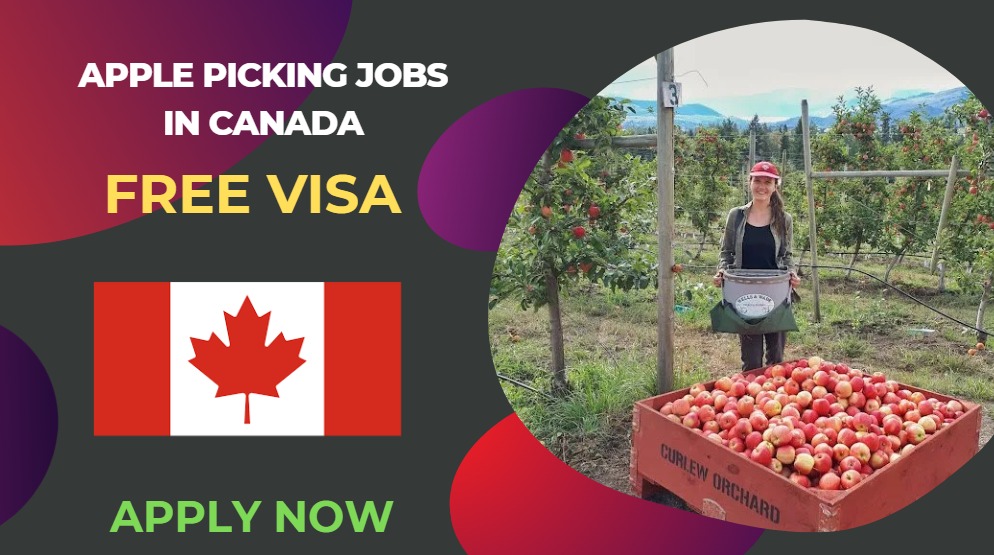
Apple Picking Jobs in Canada: Every autumn, the orchards of Canada burst into color, signaling the start of the apple harvest season. Behind the scenes of those “pick-your-own” family trips is a massive seasonal operation that relies entirely on the physical labor of thousands of workers.
For Canadian citizens, permanent residents, and international workers, apple picking offers a unique opportunity: no degree required, paid training, and wages that can climb with overtime.
However, the job is not for the faint of heart. It demands physical endurance, a tolerance for unpredictable weather, and a willingness to work in remote rural areas. Here is everything you need to know about securing an apple picking job in Canada for the 2026 season.
Table of Contents
Apple Picking Jobs in Canada
Where the Jobs Are
While apples are grown across the country, the bulk of commercial harvesting jobs are concentrated in three provinces: Ontario, British Columbia, and Nova Scotia.
Ontario: The province is currently the hottest market for postings, particularly around Aylmer, Lincoln, and Iroquois. Orchards in these regions are preparing for harvests starting as early as late August and running through November.
Quebec: The region around Danville offers opportunities not just for work, but for cultural experience. Farms here often support multicultural teams and provide assistance with visas.
British Columbia & Nova Scotia: The Okanagan Valley (BC) and the Annapolis Valley (NS) are historic apple-growing regions. Postings in areas like Berwick, NS, and Cawston, BC show steady demand for laborers.
The Wages: How Much Can You Make?
Wages for apple pickers in Canada have risen to meet demand. According to active job postings, the standard hourly wage generally ranges from $16.75 to $17.85 per hour.
However, the financial appeal often lies in the overtime. The harvest is a race against the frost. Most job postings explicitly state that employees should expect 40 to 60 hours per week . At time-and-a-half, those extra 20 hours can significantly boost a paycheck.
The Physical Reality of the Job
Before applying, you should understand that this is an outdoor, industrial job. It is not a vacation.
Physical Demands: You will be walking constantly, reaching overhead, and carrying a bag that can weigh up to 30 lbs (13.5 kg) or even 100 lbs (45 kg) depending on the orchard’s setup .
Environment: You will work in “all weather conditions.” This means hot sun, mud, rain, and cold mornings. Postings frequently list “hot,” “wet/damp,” and “cold/refrigerated” as standard conditions .
Speed: Many farms operate on a “piece rate” system (paid per bin) or a fast-paced hourly quota. Employers specifically look for “hand-eye coordination” and the ability to work in a “fast-paced environment”
A Pathway for International Workers (LMIA)
One of the most unique aspects of the current apple picking season is the prevalence of Labour Market Impact Assessments (LMIA) .
An LMIA is a document a Canadian employer must get if they want to hire a foreign worker, proving that no Canadian citizen or permanent resident was available for the job.
The Opportunity: Several current job postings explicitly state that the employer has an LMIA requested or approved. This means the farm is legally authorized to sponsor a foreign worker for a work permit .
The Requirement: Even if an LMIA is requested, the employer is still required to consider Canadian applicants first. However, if you are a foreign national looking for a legal entry point to work in Canada, targeting postings that say “LMIA requested” is your best strategy
The “Hidden” Costs: Transportation and Housing
When reviewing job applications, pay close attention to two specific sections: Transportation and Accommodation.
Transportation: Many of these farms are in “remote locations” or “rural areas.” A shocking number of postings specifically state “Own transportation” is required. If you do not have a car, you likely cannot get to the orchard .
Accommodation: Some larger farms, particularly those hiring internationally, offer housing. For example, one posting in BC offers accommodation for $30/week. Others do not. Securing a place to live in a small rural town on short notice can be difficult, so check the job posting for housing assistance before accepting an offer .
How to Apply
Most of these positions are listed on the Government of Canada Job Bank, though some appear on niche agricultural job boards.
When applying, ensure you are authorized to work in Canada. The screening questions on most applications ask specifically: “Are you authorized to work in Canada?” If you answer “no” and the employer does not have an LMIA, they will not respond .
For those ready to work hard: The window for the 2026 harvest is opening now. Bring your rain gear, sturdy boots, and a strong work ethic. The Canadian apple industry is waiting.
Disclaimer
This job information is shared for educational and informational purposes only. Any discussion of visa categories is based on general immigration laws and publicly available information.