Factory Machine Operator Jobs in Canada: As Canada continues to solidify its position as a manufacturing hub—from the automotive heartlands of Ontario to the aerospace clusters of Quebec and the food processing plants of British Columbia—the demand for skilled Factory Machine Operators is surging.
For newcomers, skilled tradespeople, and those seeking stable, well-compensated work without a university degree, this role is a cornerstone of the Canadian economy. But what does the job actually entail, and how do you land one?
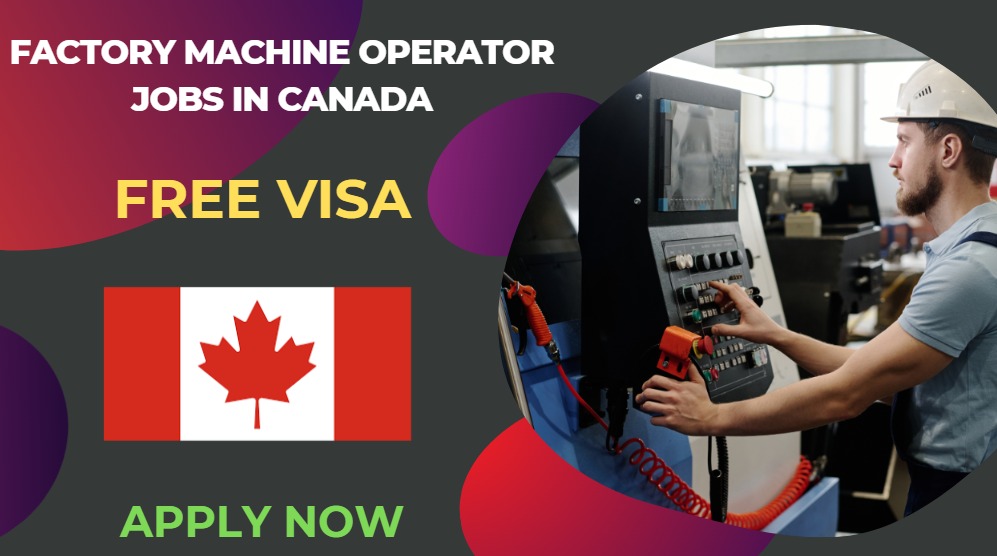
Table of Contents
The Role: More Than Just Pushing Buttons
Modern factory machine operators are hybrid technicians. While the title suggests repetitive work, today’s floors rely on Computer Numerical Control (CNC) machines, robotic assembly lines, and automated packaging systems.
Primary responsibilities include:
Setup and Calibration: Adjusting machine settings to meet product specifications.
Monitoring: Watching gauges, meters, and computer readouts to ensure quality.
Troubleshooting: Identifying jams, tool wear, or material defects before they ruin a batch.
Maintenance: Performing basic cleaning, lubrication, and part replacement.
Safety Compliance: Adhering to strict Occupational Health and Safety (OHS) regulations.
The Salary: What You Can Expect to Earn
Wages vary significantly by province and industry. According to Job Bank (Government of Canada) and industry surveys for 2024:
Entry-Level (0-2 years): $17.00 – $21.00 per hour
Experienced (3-5 years): $22.00 – $28.00 per hour
Specialized/Lead Hand (CNC, Millwright overlap): $30.00 – $38.00+ per hour
Top-Paying Industries:
Oil & Gas refinery operations (Alberta) – *Often exceeds $35/hr*
Automotive parts manufacturing (Ontario)
Pharmaceutical & medical device production (Quebec, BC)
Overtime is standard. Most factories operate on rotating shifts (days, afternoons, nights). Shift premiums typically add $1.50 to $3.00 per hour for evenings and weekends.
Who Is Hiring? Major Sectors
Food & Beverage Processing: The largest manufacturing employer in Canada. Think bakeries, meat packing, and beverage bottling.
Metal Fabrication & Automotive: Windsor, Oakville, and Cambridge are hotspots for stamping and assembly operators.
Plastics & Rubber Manufacturing: High demand for injection molding machine operators in Ontario and Quebec.
Wood & Paper Products: British Columbia’s pulp and paper mills require machine tenders.
How to Get Hired (Without Canadian Experience)
Many newcomers worry about the “Canadian experience” barrier. For machine operators, certifications and safety tickets trump local tenure.
Essential Certifications:
WHMIS 2015 (Workplace Hazardous Materials Information System) – Free or cheap online.
Lockout/Tagout (LOTO) – Critical for safety.
First Aid/CPR – Often required.
Optional but Highly Valued:
Forklift Operator Certificate – Having this makes you a dual-threat candidate.
CNC Programming Basics (Even a short community college course helps).
The “Foot in the Door” Strategy:
Because factories run 24/7, they hire through temp-to-perm agencies (Aerotek, Randstad, AppleOne). Many operators start as a temp for 3-6 months. If you show up on time and learn the machines, the factory will buy out your contract and hire you directly with full benefits.
The Downsides (Be Honest)
This isn’t a desk job. You need physical stamina—standing on concrete for 8-12 hours, lifting 10-25kg frequently, and working in loud (earplugs required) or hot environments. Repetitive strain injuries are a risk, so proper ergonomics and stretching are mandatory.
Immigration Pathways
Factory machine operator (NOC 94100 – Machine operators, mineral and metal processing; and NOC 95101 – Machine operators, food processing) often falls under TEER 4 or 5 categories. While these are not usually eligible for Federal Express Entry, they are prime candidates for:
Provincial Nominee Programs (PNPs): Many provinces (Manitoba, Saskatchewan, Atlantic Canada) specifically nominate industrial machine operators for permanent residence due to local shortages.
Atlantic Immigration Program (AIP): Strong demand in New Brunswick and Nova Scotia for production operators.
The Verdict
If you are mechanically inclined, don’t mind shift work, and want a predictable paycheck with benefits (dental, vision, pension match), factory machine operator jobs in Canada offer a clear path to the middle class.
Pro tip: Apply in person. Drive to the industrial park, walk into the shipping/receiving office, and ask for an application. Many smaller Canadian manufacturers ignore online postings and still hire with a “handshake and steel-toed boots.”
Disclaimer
This job information is shared for educational and informational purposes only. Any discussion of visa categories is based on general immigration laws and publicly available information.
Disclaimer
This job information is shared for educational and informational purposes only. Any discussion of visa categories is based on general immigration laws and publicly available information.





Job, visa, salary, deadline and eligibility details can change. Check the employer or relevant government/official source before applying, paying money or making travel arrangements.
If you spot an outdated or inaccurate detail, please contact us with the article URL.