Food Factory Packing Jobs in UK: In the vast ecosystem of British manufacturing, few roles are as vital—or as numerous—as the food factory packer. From the pre-dawn hours in a Leicester sandwich plant to the night shifts at a frozen pea factory in Yorkshire, packing jobs form the backbone of the UK’s £120 billion food and drink industry.
For many, these roles are a first step into the workforce. For others, they are a reliable source of overtime, shift work, and immediate employment. But what does a food packing job actually involve in 2026, and is it the right fit for you?
Table of Contents
Food Factory Packing Jobs in UK
The Day-to-Day: More Than Just Tape and Boxes
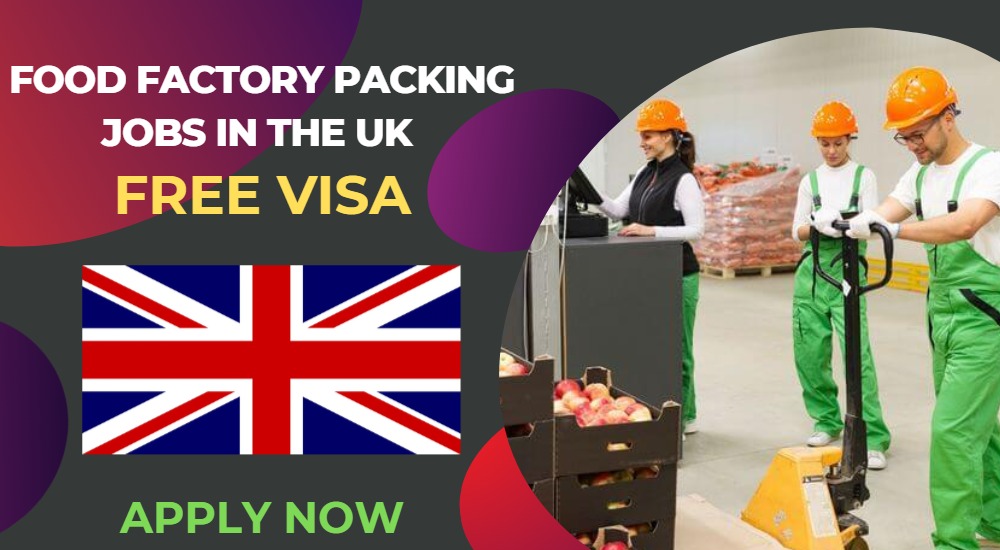
While the title “packer” might sound simple, modern food factories are highly automated, hygienic, and safety-driven environments. Your primary goal is to ensure that products reach the supermarket shelf safely, accurately, and looking perfect.
Daily tasks typically include:
Feeding lines: Placing products (yogurts, ready-meals, biscuits) onto a moving conveyor belt.
Weight and quality checks: Using digital scales to ensure each pack meets legal weight requirements and visually checking for damaged or misshapen items.
Date coding: Ensuring the correct “use by” or “best before” date is printed on every package.
Case packing: Loading individual units into cardboard shipping cartons.
Palletising: Stacking full cartons onto pallets (sometimes with robotic assistance, often manually) and wrapping them for transport.
The Environment: Cold, Fast, and Clean
First-time packers are often surprised by the physical conditions. Unlike an office, a food factory has strict rules.
The Cold: If you work in meat, dairy, or ready-meals, expect temperatures between 2°C and 8°C (35°F to 46°F). Freezer work (ice cream, frozen veg) can drop to -20°C (-4°F). You will be issued thermal coats and gloves, but the chill is relentless.
The Speed: Production lines rarely stop. You will likely have a “target pack rate” (e.g., 25 packs per minute). During the first few weeks, your hands may ache as your muscle memory catches up.
The Hygiene: This is non-negotiable. You will wear hairnets, beard covers, bump caps, steel-toe boots, a lab coat or overalls, and gloves. Before entering the production floor, you must wash hands and sanitise boots in a chemical footbath. Jewelry and nail polish are forbidden.
Pay, Hours, and Who is Hiring
Pay: As of 2026, most entry-level packing jobs pay at or slightly above the National Living Wage (£11.44 per hour for over-21s). However, the real earning potential comes from shifts.
Day shift: £11.00 – £13.00 per hour
Night shift: £14.00 – £17.00 per hour (due to unsocial hours premium)
Weekend shifts: Often time-and-a-half or double-time.
Hours: The industry runs on 8 or 12-hour shifts. Common patterns include “4 on, 4 off” (two days, two nights, then four days off) or fixed continental shifts (Mon-Wed or Thu-Sat).
Who is hiring? Major employers include:
2 Sisters Food Group (poultry and ready meals)
Bakkavor (fresh prepared foods)
Greencore (sandwiches and chilled foods)
Kepak (meat products)
Samworth Brothers (pasties and slices)
These factories are concentrated in the Midlands (Lincolnshire, Nottinghamshire), East Anglia, and the North West.
The Pros and Cons
Advantages:
No experience required: Full training is usually provided on the job.
Immediate start: Agencies can often place you within 48 hours.
Overtime: If you want 50-60 hour weeks, you can usually find them.
Active work: You won’t be staring at a screen; you’ll be on your feet moving.
Staff sales: Many factories sell damaged or surplus stock to employees cheaply.
Disadvantages:
Physical toll: Standing on concrete floors for 10+ hours can cause back, knee, and foot problems.
Repetitive strain: The same twisting or gripping motion, repeated 5,000 times a shift, leads to RSI.
Shift work: Rotating from days to nights disrupts sleep and social life.
High turnover: The work is hard, so many people quit within weeks. Morale can be low.
Strict discipline: Being late, missing hygiene steps, or using a mobile phone usually means instant suspension.
How to Get a Packing Job
You have two routes:
Direct employment: Apply via company career pages (e.g., “Careers at Bakkavor”). This usually offers better sick pay and holiday benefits but may have a slower hiring process.
Agency work: Firms like The Staffing Group, Blue Arrow, Pertemps, or Gi Group specialise in food manufacturing. You are paid weekly, but you have fewer rights and zero-hour contracts are common. Most agencies require you to pass a basic numeracy test (counting packs) and a drug/alcohol screen.
The Verdict
Food factory packing jobs in the UK are not glamorous, and they are not easy. However, for a motivated person, they offer a reliable, immediate income with clear overtime rules. Many warehouse supervisors, hygiene managers, and logistics coordinators started with a packing knife in their hand.
If you are physically fit, punctual, and can tolerate repetition—and cold feet—this sector will always have a place for you. Just remember to invest in a good pair of supportive insoles.
Disclaimer
This job information is shared for educational and informational purposes only. Any discussion of visa categories is based on general immigration laws and publicly available information.