Food Processing Worker Jobs in the USA for Immigrants: The food processing industry in America is massive, and it never stops. From meat packing plants in Nebraska to chocolate factories in New Jersey, these facilities run day and night to keep grocery stores stocked. For immigrants looking to work in the USA, this sector offers real opportunities—but the path depends heavily on your current situation and which visa options are available.
This guide will walk you through everything you need to know: what the job involves, how much you can earn, which visa pathways actually work, and how to find employers who are willing to hire internationally.
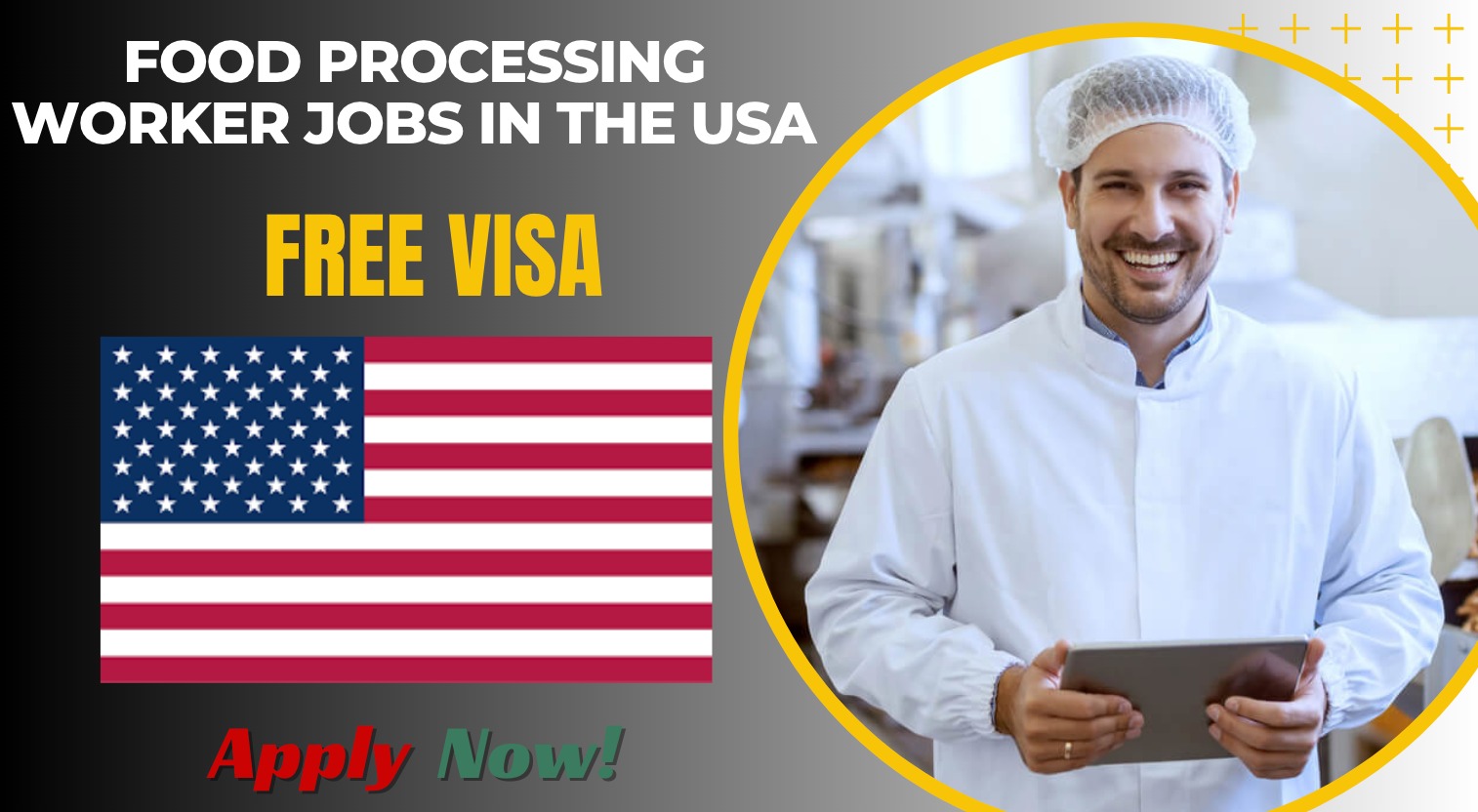
Table of Contents
What Does a Food Processing Worker Actually Do?
Let’s start with the basics so you know exactly what you are getting into. Food processing work is hands-on, physical, and takes place in manufacturing environments like meat packing plants, bakeries, fruit packing sheds, and frozen food facilities.
Your daily tasks typically include:
Preparing raw materials: washing, cutting, sorting, and trimming ingredients before processing
Operating production lines: feeding materials into machines, monitoring equipment, and ensuring smooth flow
Packaging finished products: weighing, labeling, bagging, and boxing items for shipment
Quality checks: inspecting products for defects, removing不合格 items, and following safety standards
Cleaning and sanitation: keeping workstations clean, following strict hygiene protocols
The work environment varies. Some facilities are cold—think meat processing where temperatures stay near freezing. Others involve heat from cooking or baking lines. You will be on your feet for most of your shift, often 8 to 10 hours, and you should expect repetitive movements .
Many of these jobs do not require prior experience. Employers provide on-the-job training because they care more about your work ethic, reliability, and willingness to learn than your resume .
Salary Expectations: What Can You Earn?
Money matters, so let’s get into the numbers. Food processing worker salaries in the USA vary based on location, experience, and the specific employer.
Entry-Level and Average Wages
For food preparation and basic processing roles, the average hourly wage is around $15 per hour, with annual salaries averaging $30,500 . However, this figure can be misleading because many food production jobs pay higher.
Looking specifically at food production worker roles, the numbers look different:
Entry-level (less than 1 year experience): around $41,900 per year
Early career (1-2 years): approximately $46,500 per year
Mid-level (2-4 years): about $52,800 per year
You might be wondering why there is such a big difference between $30,500 and $41,900. It comes down to job classification. “Food preparation worker” often refers to restaurant or cafeteria roles, while “food production worker” refers to manufacturing and processing jobs, which typically pay better .
Real Job Examples
Let’s look at actual job postings to understand real-world pay:
Cargill in Fort Worth, Texas: General Production position paying $20.00 per hour
Russell Tobin in Piscataway, New Jersey: Production Worker role paying $17-18 per hour
Wholestone Farms in Fremont, Nebraska: Plant Professional positions with competitive benefits
Location Matters
Where you work in America has a huge impact on your paycheck. States with higher costs of living pay more:
Top-paying states for food production workers :
District of Columbia: $51,154 per year
California: $50,960 per year
Massachusetts: $50,280 per year
Washington: $50,096 per year
New Jersey: $50,077 per year
Top-paying cities:
San Jose, California: $58,273 per year
San Francisco, California: $57,700 per year
New York, New York: $53,542 per year
But don’t assume you have to go to expensive cities. States like Texas, Nebraska, and Florida also have strong food processing industries with wages that go far when you consider lower housing costs .
Visa Options for Immigrant Food Processing Workers
This is where things get specific. Different visa pathways exist, and each has different requirements. Let me break them down clearly.
H-2B Visa: Temporary Non-Agricultural Work
The H-2B visa is a major pathway for food processing workers. This visa is for temporary non-agricultural work, and food processing falls squarely in this category .
Key facts about the H-2B visa:
It is for temporary or seasonal work, typically less than one year
The employer must prove there are not enough US workers available for the job
Workers can stay for up to three years in total by renewing
There is an annual cap of 66,000 visas, split into two halves each year
Important recent development: fish processing workers and seafood processors are exempt from the cap until December 2029, which means more opportunities in that specific sector .
Who uses the H-2B program? In 2024, top employers included seafood processing companies like Westward Seafoods Inc, which approved 922 workers . Many food processing plants, meat packing facilities, and seafood operations rely on H-2B workers.
H-2A Visa: Agricultural Processing
If your work involves processing agricultural products that come directly from farms—like fruit packing, vegetable canning, or similar—the H-2A agricultural visa might apply. This program covers food processing tasks that are considered agricultural in nature .
The H-2A program has some advantages:
No annual cap on visas
Employers must provide housing in many cases
Stronger worker protections
However, it is specifically for agricultural work, so it applies to food processing that happens on or near farms, not necessarily large urban processing plants.
EB-3 Visa: The Permanent Residency Path
For immigrants seeking a Green Card and permanent residency in the USA, the EB-3 visa is the most promising pathway for food processing workers .
The EB-3 is an employment-based immigrant visa that leads to permanent residency. Here is what you need to know:
What the EB-3 offers :
10-year Green Card for you and your family
Path to US citizenship after 5 years
Spouse and children under 21 can also get Green Cards
Children get free public education through grade 12
Full labor law protections including health insurance
Ability to sponsor relatives later
Requirements :
Age between 18 and 50
Good health with no criminal record
No history of immigration violations
No prior experience needed—employers provide training
Processing time: The EB-3 process takes about 4 to 5 years from start to Green Card in hand . This is not a quick solution, but it is a legal, permanent path.
Currently, food processing EB-3 positions are being recruited in states like Utah and Colorado . You need an employer to sponsor you—you cannot apply on your own.
TN Visa: For Mexican and Canadian Citizens
If you are a citizen of Mexico or Canada, the TN visa under USMCA (formerly NAFTA) is another option for certain food processing roles.
For example, Wholestone Farms in Nebraska actively recruits plant professionals from Mexico using the TN visa program . However, this pathway has specific requirements:
You must be a citizen of Mexico or Canada
You need a relevant bachelor’s degree (food science, biology, chemistry, veterinary medicine, agronomy, etc.)
The role must qualify as a professional occupation under USMCA
This is not an option for citizens of other countries.
The Reality Check: Many Jobs Require Existing Work Authorization
Here is an important truth: many food processing jobs advertised online require applicants to already have work authorization. You will see language like this in job postings:
“Must be eligible to work in the United States without visa sponsorship”
“Publix does not and will not file a petition or application with the USCIS”
This does not mean there are no opportunities. It means you need to focus your search on employers who participate in H-2B, H-2A, or EB-3 programs rather than applying to every random job posting.
How to Find Employers Who Sponsor Visas
Finding the right employer takes strategy. Here is practical advice:
Target Companies with H-2B History
Look for companies that have previously hired through H-2B programs. Seafood processors like Westward Seafoods, tree service companies, and landscaping firms sometimes have food processing operations . Research companies in your target industry and check if they have H-2B approval history.
Connect with Immigration Law Firms
Law firms that specialize in employment-based immigration often work with employers who are actively recruiting foreign workers. For example, the Law Office of Jennifer C. Ha currently assists with EB-3 food processing placements in Utah and Colorado . Reaching out to such firms can connect you with legitimate opportunities.
Check State Labor Agency Resources
State agencies like FloridaCommerce manage foreign labor certification programs and can provide information about employers seeking H-2A and H-2B workers . Each state has similar resources—find the labor department website for the state where you want to work.
Avoid Job Scams
This is critical. Be extremely careful of job postings that:
Ask you to pay money upfront for visa processing
Promise guaranteed Green Cards without a legitimate employer sponsor
Contact you through WhatsApp or personal email without a company domain
Claim they can get you a visa without employer sponsorship
Legitimate visa processes always involve a sponsoring employer. No one can get you a work visa without a real job offer from a real company.
Job Requirements You Should Know
Even for entry-level positions, employers look for certain qualities. Here is what you need to succeed:
Physical requirements :
Ability to lift 25-50 pounds regularly
Standing and walking for 6-8 hours per shift
Bending, reaching, and repetitive motions
Working in cold (refrigerated) or hot environments
Basic skills:
Ability to follow written and verbal instructions
Attention to detail for quality checks
Punctuality and reliable attendance
Teamwork and communication
Basic math skills for counting and weighing
Language:
Basic English communication is required for most positions
Some roles prefer bilingual candidates, especially Spanish-English
For TN visa roles, Spanish may be acceptable depending on employer
Worker Rights and Protections
If you come to the USA as a food processing worker, understand your rights. All workers in America—regardless of immigration status—have legal protections .
Your rights include:
Being paid at least minimum wage (and overtime for hours over 40 per week)
Working in a safe and healthy environment
Receiving safety gear and training when using equipment
Being free from discrimination and harassment
Reporting unsafe conditions without retaliation
Organizations that help immigrant workers include Farmworker Justice, Centro de los Derechos del Migrante, and state-specific groups like the Farmworker Association of Florida . These organizations provide free legal help, worker rights education, and community support.
Step-by-Step Action Plan
If you are serious about pursuing food processing work in the USA, here is a practical roadmap:
Step 1: Determine Your Eligibility
Assess your current situation. Are you a citizen of Mexico or Canada? Do you have a relevant degree? Are you open to temporary work (H-2B) or seeking permanent residency (EB-3)? Your answers will determine which pathway makes sense.
Step 2: Gather Your Documents
Prepare your passport, educational certificates, and any relevant work records. For EB-3, you will need to prove age, health, and clean criminal record .
Step 3: Research Employers
Look for companies that sponsor H-2B or EB-3 workers. Target states with strong food processing industries: Nebraska, Texas, California, Florida, Utah, Colorado.
Step 4: Consult an Immigration Attorney
This is not something to do alone. Immigration law is complex, and mistakes can delay or derail your application. A qualified attorney can help you find legitimate employers and file correctly.
Step 5: Apply Through Proper Channels
Work with your employer and attorney to file the correct petitions. Do not pay anyone who promises a visa outside the official process.
Step 6: Be Patient
The EB-3 process takes years. H-2B processing is faster but only provides temporary status. Plan accordingly.
Final Thoughts
Food Processing Worker Jobs in the USA for Immigrants: Food processing jobs in the USA offer stable income, legal pathways to permanent residency, and opportunities for immigrants willing to work hard. The H-2B visa provides temporary seasonal work, while the EB-3 visa offers a longer but permanent path to American citizenship.
The industry needs workers. Companies across the country struggle to find enough people to process meat, pack produce, and run production lines. For immigrants who are patient, persistent, and willing to follow the legal process, these jobs can be the foundation of a new life in America.
Start by researching employers, consult with an immigration attorney, and take the first step. The road is long, but many have walked it before you and succeeded.
Disclaimer
This job information is shared for educational and informational purposes only.
Any discussion of visa categories is based on general immigration laws and publicly available information





Job, visa, salary, deadline and eligibility details can change. Check the employer or relevant government/official source before applying, paying money or making travel arrangements.
If you spot an outdated or inaccurate detail, please contact us with the article URL.