
Cold Storage Worker Jobs in Germany for Immigrants: Germany’s cold storage and logistics sector is one of the fastest-growing industries in Europe, driven largely by the booming e‑commerce market and the nation’s role as a central logistics hub. For immigrants, cold storage jobs offer an excellent entry point: they often require little to no German, provide full social benefits, and can lead to permanent residency. However, working in temperatures as low as -25°C requires physical resilience and strict adherence to safety protocols.
Advertisement
Table of Contents
Cold Storage Worker Jobs in Germany for Immigrants
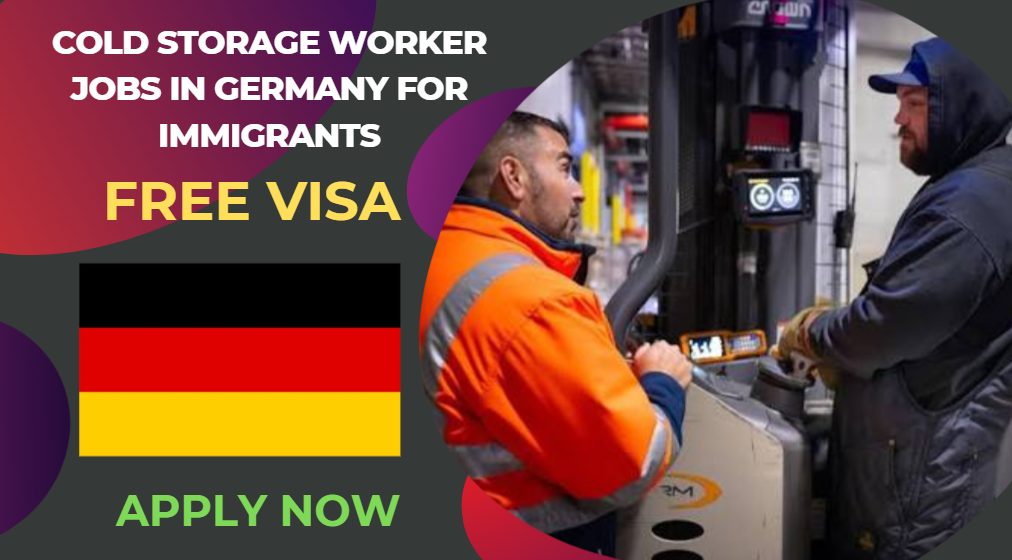
Here is everything you need to know about starting a career in Germany’s cool storage industry.
What Does a Cold Storage Worker Do?
Cold storage workers ensure that frozen and chilled goods are stored, picked, packed, and shipped under strict temperature conditions. Tasks vary depending on the facility but generally include:
Order Picking (Kommissionierung): Locating products in freezer or chiller aisles using voice-picking headsets or handheld scanners.
Loading & Unloading (Verladung): Moving pallets in and out of temperature-controlled trucks and containers.
Warehouse Management (Lagerverwaltung): Using handheld scanners (PDAs) to track inventory.
Quality Control: Inspecting goods for damage or thawing before shipment.
Many employers expect workers to have a forklift license (Staplerfahrerlaubnis) or be willing to obtain one, as moving pallets in tight freezer aisles is a daily requirement.
Salary Expectations for 2026
Cold storage workers earn a premium over standard warehouse staff due to the freezing conditions. While entry-level helpers start at around €14.00 to €15.00 per hour, those with forklift licenses or night shift availability can earn significantly more.
Estimated Hourly & Monthly Wages
| Position / Shift | Hourly Rate (€) | Monthly Gross (€) |
|---|---|---|
| Helper (Entry-Level) | 13.50 – 14.50 | 2,200 – 2,500 |
| Forklift Operator | 15.00 – 17.00 | 2,600 – 3,000 |
| Night Shift / Weekend | 17.00 – 20.00+ | 3,000 – 3,500+ |
Shift Bonuses: Working in a freezer is classified as hazardous heavy labor (Schwerarbeit). Employees are legally entitled to “Kältezulage” (cold allowances). Night shifts, Sunday shifts, and public holidays often pay significantly higher bonuses, sometimes up to double the base rate.
Physical & Health Requirements
Working in temperatures of -18°C to -25°C is not for everyone. The German social security system requires a medical certificate (ärztliches Zeugnis) confirming you are fit for cold work.
Mandatory Qualifications:
Medical Fitness: You must pass a cold chamber or medical exam proving you have no circulatory or respiratory issues that would be aggravated by freezing temperatures.
Forklift License (Highly Recommended): Most cold storage operators require a forklift license (CE or DEKRA). If you don’t have one, some agencies sponsor the training.
Protective Gear (PSA): Employers must provide free freezer suits, gloves, and safety shoes rated for extreme cold.
Legal Pathways for Immigration (2026)
Germany offers several visa routes for non-EU citizens. Unlike medical doctors, cold storage workers do not require a university degree, but you need a concrete job offer.
1. The EU Blue Card
Requirement: A university degree (Bachelor’s) and a high salary (approx. €45,000/year).
Verdict: Not suitable for entry-level helpers.
2. The Skilled Worker Visa (Fachkräfteeinwanderungsgesetz)
Requirement: Recognized vocational training certificate.
For Helpers: If you have formal training as a warehouse logistics specialist (Fachlagerist), you may qualify. If not, this route is difficult unless the employer sponsors an apprenticeship (Ausbildung).
3. Temporary Work Visa via Recruitment Agencies (Agenturarbeit)
The Fastest Route: Many migrants enter the sector through staffing agencies (Zeitarbeitsfirmen). The agency applies for the work permit; once approved, you can start working quickly.
Downside: You are bound to the agency for the first few months.
4. The “Chancenkarte” (Opportunity Card)
Best for 2026: This new points-based system allows you to enter Germany and search for work for up to one year. If you score points for work experience and language skills, you can find a sponsor once you are in the country.
Language Requirements (Is English Enough?)
Cold storage work is technical and safety-critical. While the machines may use English, your colleagues might not.
Safety First: You need to understand safety warnings like “Achtung! Rückwärtsfahrt” (Caution, reversing) or “Kälteschutz” (cold protection).
The Realistic Standard: Basic German (A2) is the absolute minimum. You need to be able to read scanner instructions and call for a supervisor in an emergency.
Agency Support: Large logistics hubs (like Leipzig or Frankfurt) often have multinational teams, and some agencies (e.g., Randstad, Adecco) have English-speaking HR departments to handle the visa paperwork.
How to Find a Job
Prepare Your CV: Convert your resume to the Europass format.
Target Logistics Hubs: Jobs are concentrated at major airports (Frankfurt, Munich, Leipzig/Halle) and central distribution centers (Hessen, North Rhine-Westphalia).
Apply via Staffing Agencies: This is the most effective route for immigrants without a European passport.
Secure the Job Offer: You need a signed contract to apply for the visa.
Challenges & Risks
The Cold: Despite high-quality gear, the work is physically draining. “Cold shock” and loss of dexterity are real risks.
Shift Work: Freezers run 24/7. Expect early starts, late nights, and weekend shifts.
Physical Strain: Constant lifting, bending, and walking on concrete floors in heavy boots is tough on the joints.
Cold storage work is a solid, “bread-and-butter” job in Germany. It may not be prestigious, but it pays the bills, offers overtime, and provides a direct path to staying legally in the country for motivated workers. If you can handle the cold, the industry is ready for you.
Disclaimer
This job information is shared for educational and informational purposes only. Any discussion of visa categories is based on general immigration laws and publicly available information.