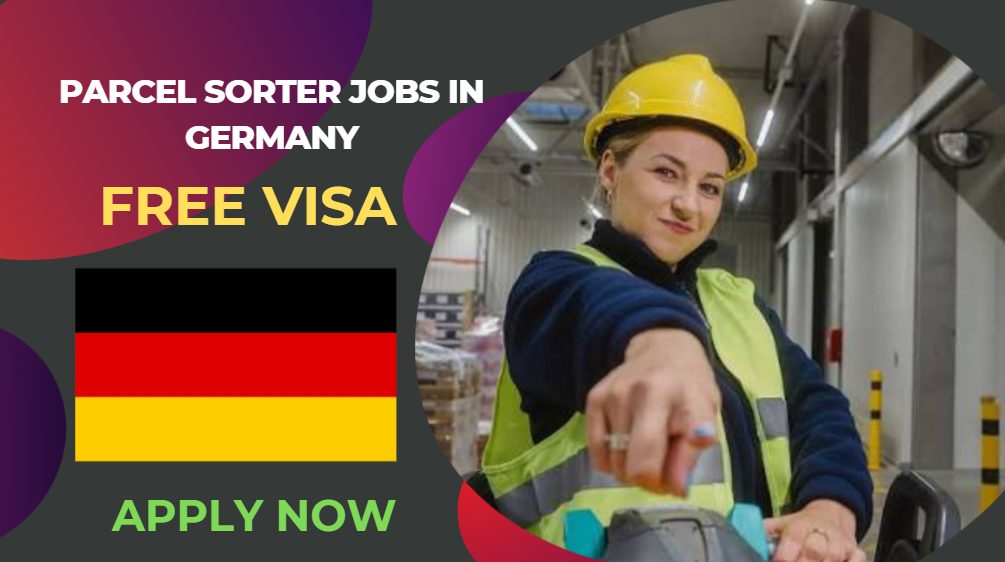
Parcel Sorter Jobs in Germany: Every day, millions of parcels travel across Germany’s extensive logistics network. At the heart of this operation are parcel sorters—the warehouse workers who ensure that packages are scanned, sorted, and routed correctly. For international workers, parcel sorter jobs offer one of the most accessible entry points into the German labour market, with competitive pay, full social benefits, and—for the right candidates—a clear path to visa sponsorship.
Table of Contents
Parcel Sorter Jobs in Germany
This guide covers everything: what parcel sorters do, pay rates (€15–€17/hour plus shift bonuses), which companies actively hire foreigners (DHL, UPS, GLS, and recruitment agencies), visa options for non‑EU citizens, language requirements, and exactly how to land a parcel sorter job with a legal work permit.
What Is a Parcel Sorter?
A parcel sorter (Paketsortierer) is a warehouse worker who processes incoming and outgoing parcels. You work on a conveyor belt or in a sorting facility, scanning barcodes, sorting packages by destination, and loading them onto trucks for delivery. This is an entry‑level role that requires physical fitness, reliability, and basic language skills.
Other common job titles:
Paketsortierer (Parcel Sorter)
Lagermitarbeiter (Warehouse Worker)
Kommissionierer (Order Picker)
Paketzusteller (Parcel Delivery – different role)
Warehouse Package Handler (UPS term)
What you are NOT: A delivery driver or a forklift operator (though these roles exist in the same facilities).
The golden rule of parcel sorting: Accuracy before speed. A single misrouted parcel can cause hours of delays. Scan everything, double‑check destinations, and always work safely.
Core Duties: What Parcel Sorters Actually Do
Parcel sorting is repetitive, fast‑paced, and physically demanding. The work is organised in shifts to match the flow of delivery trucks.
Typical responsibilities:
| Task | Frequency | Details |
|---|---|---|
| Sorting parcels | Throughout shift | Placing packages on conveyor belts or into sorting bins according to route or postal code |
| Scanning barcodes | Throughout shift | Using handheld scanners (PDAs) to log parcels into the system |
| Loading/unloading trucks | At start/end of shift | Moving parcels from delivery trucks onto the sorting line |
| Labeling | As needed | Applying shipping labels to parcels before dispatch |
| Quality control | Throughout shift | Checking for damaged packages, reporting issues |
| Keeping the warehouse clean | Throughout shift | Clearing empty pallets, sweeping work areas |
A typical sorting centre shift:
Morning sort (5:00 AM – 2:00 PM): Processing overnight deliveries
Evening sort (5:00 PM – 2:00 AM): Processing outgoing parcels for next‑day delivery
Night sort (11:00 PM – 8:00 AM): Handling bulk shipments and international transfers
Pay Rates for Parcel Sorters in Germany (2026)
Parcel sorters earn competitive wages, with significant bonuses for evening, night, and weekend shifts.
Hourly & Monthly Rates
| Shift | Hourly Rate (€) | Monthly Gross (€) | Monthly Net (€, approx) |
|---|---|---|---|
| Day shift | €13.50 – €15.00 | €2,200 – €2,500 | €1,500 – €1,700 |
| Evening shift | €15.00 – €16.50 | €2,500 – €2,800 | €1,700 – €1,950 |
| Night shift | €16.00 – €18.00 | €2,800 – €3,200 | €1,900 – €2,200 |
| Weekend / holiday | Up to €20+ | €3,200 – €3,500+ | €2,200+ |
Real examples from job postings:
| Employer | Location | Shift | Pay |
|---|---|---|---|
| GLS | Wijchen area | Night shift (11pm–8am) | €16.10–€16.47/hour |
| DHL | Nationwide | Various | €14.71–€15.20/hour |
| Parcel sorter (via agency) | Poing (Munich) | Early shift (5am start) | €15+ plus bonuses |
Shift Bonuses: Evening and night shifts pay significantly more than day shifts. UPS requires the ability to lift up to 32 kg and work flexible shifts . GLS offers travel expense reimbursement and overtime pay.
Additional Benefits (Common):
Christmas and vacation bonuses (Urlaubsgeld, Weihnachtsgeld)
Employee referral bonuses
Free PPE (safety shoes, gloves, high‑vis vests)
Training opportunities (including forklift licence)
Career progression: After 9–12 months, many workers are offered permanent contracts
Major Employers Hiring Parcel Sorters
Germany’s logistics market is dominated by a few major players, all of which regularly hire parcel sorters.
1. DHL – The Largest Logistics Employer
DHL is Germany’s biggest parcel service, with distribution centres across the country. They offer both entry‑level sorting jobs and formal apprenticeship programmes .
Entry‑level sorting: €14.71–€15.20/hour
Apprenticeship (Ausbildung): 2‑year programme starting September 2026
Monthly pay: €1,334+ (increasing annually)
27 days paid holiday
High chance of permanent employment after completion
Requires German B1/B2 and a driver’s licence
2. UPS (United Parcel Service)
UPS is a major player in the German parcel market, with sorting facilities across the country.
Warehouse package handler (part‑time): Evening sort shifts available
Physical requirements: Ability to lift up to 32 kg
Must be able to read and memorise postal codes
3. GLS (General Logistics Systems)
GLS operates a large network of parcel centres in Germany.
Evening & night shifts: €16.10–€16.47/hour including shift allowances
English language: Basic English is acceptable
Locations: Netherlands near German border (accessible for workers living in Germany)
4. Recruitment Agencies (Best for Visa Sponsorship)
For non‑EU applicants, recruitment agencies are the most reliable route. These agencies handle work permit applications and often provide accommodation.
M&H Personalservice GmbH (Poing, near Munich):
Early shift (5:00 AM start)
Pay: Over‑tariff (above collective agreement)
Language: Basic German or English required
Benefits: Christmas bonus, vacation pay, training opportunities
High chance of permanent contract after 9–12 months
Avnet (electronics logistics): Also hires parcel sorters in the Munich area
Work Visas & Permits for Parcel Sorters (Critical Section)
This is the #1 question for non‑EU applicants. Germany offers several visa pathways, but entry‑level parcel sorters are not eligible for the EU Blue Card (which requires a degree and higher salary). However, the Skilled Worker Visa and recruitment agency‑sponsored visas are realistic options.
For EU Citizens (Polish, Romanian, French, etc.)
| Requirement | Status |
|---|---|
| Visa needed? | ❌ No |
| Work permit needed? | ❌ No |
| Registration required? | ✅ Yes – Anmeldung and Tax ID |
How to work as an EU citizen: Travel to Germany → apply to logistics companies → register address → start work within 1‑2 weeks.
For Non‑EU Citizens – Recruitment Agency Pathway (Most Common)
The most practical route for parcel sorters is through recruitment agencies (Zeitarbeitsfirmen) that specialise in logistics placements and handle visa arrangements.
| Requirement | Details |
|---|---|
| Job offer | Agency matches you with a parcel sorting position |
| Experience | Not required for entry‑level helper roles |
| Language | Basic German or English (A1–A2 minimum) |
| Age | 18–60 (employer specific) |
| Physical fitness | Able to lift 15–25kg, stand for long hours |
| Police clearance | Required |
How it works:
Apply to recruitment agencies (M&H Personalservice, Randstad, Adecco)
Agency offers you a job contract
Agency initiates the work permit process with the Federal Employment Agency
You apply for a national visa (category D) at the German embassy
Once approved, travel to Germany, register your address, and start working
Agencies known to sponsor foreign workers:
M&H Personalservice GmbH (Poing/Munich) – currently hiring parcel sorters with English/German
Randstad – large international agency
Adecco – global staffing solutions
Manpower – worldwide logistics placements
For Non‑EU Citizens – Skilled Worker Visa (§18a AufenthG)
If you have vocational training in logistics (e.g., Fachlagerist or Fachkraft für Lagerlogistik), you may qualify for the Skilled Worker Visa .
| Requirement | 2026 Details |
|---|---|
| Qualification | Recognised vocational training (minimum 2 years) |
| Job offer | Concrete contract in your trained field |
| German language | A2–B1 recommended |
| BA approval | Required (Federal Employment Agency) |
This is not suitable for entry‑level helpers without formal training.
For Non‑EU Citizens – Opportunity Card (Chancenkarte)
If you don’t have a job offer yet, the Opportunity Card allows you to enter Germany to search for work for up to one year .
| Feature | Details |
|---|---|
| Points needed | Minimum 6 |
| Work rights | Up to 10 hours/week while searching |
| Valid for | Up to 1 year |
| Points for | Qualifications, language, experience, age, connection to Germany |
How it works:
Calculate your points (experience counts)
Apply at German embassy
Travel to Germany, search for parcel sorting jobs
Once hired, convert to a work visa
The Opportunity Card is ideal for experienced warehouse workers who don’t yet have a job offer.
For Non‑EU Citizens – Western Balkans Regulation (Fastest Pathway)
Citizens of Albania, Bosnia, Kosovo, Montenegro, North Macedonia, and Serbia have simplified access to work permits for entry‑level roles.
| Feature | Details |
|---|---|
| Qualification required? | No |
| Processing time | 4–12 weeks |
| Annual quota | 25,000 visas |
Language Requirements
Short answer: Basic German (A1–A2) is preferred, but some agencies accept English.
| Employer | Language Needed | Source |
|---|---|---|
| M&H Personalservice (Poing) | Basic German or English | |
| GLS (Netherlands border) | Basic English | |
| DHL Ausbildung | German B1/B2 (for apprenticeship) | |
| UPS | Must read postal codes (German) | |
| Smaller logistics firms | Basic German (A2) recommended |
German you should learn (minimum 30 words):
| English | German |
|---|---|
| Good morning | Guten Morgen |
| Parcel | Paket |
| Sorting | Sortierung |
| Conveyor belt | Förderband |
| Postal code | Postleitzahl (PLZ) |
| Destination | Zielort |
| Scanner | Scanner |
| To load | laden |
| To unload | entladen |
| Label | Etikett |
| Shift | Schicht |
| Damage | Beschädigung |
| Warehouse | Lager |
| Pallet | Palette |
Recommendation: Learning A1–A2 German significantly improves your job options and visa points. For the DHL apprenticeship, B1 German is required .
Physical & Health Requirements
Working in a parcel sorting centre is physically demanding.
Mandatory requirements:
Ability to lift up to 25kg (UPS requires 32kg)
Standing for 8‑hour shifts
Early starts (5:00 AM for morning sorts)
Flexibility for shift work
Medical fitness certificate (may be required by some employers)
Many employers provide:
Safety shoes (Sicherheitsschuhe)
Work gloves
High‑visibility vests
How to Find Parcel Sorter Jobs with Visa Sponsorship
Step 1: Determine Your Pathway
EU citizens: Travel freely, apply directly
Non‑EU (entry‑level): Apply through recruitment agencies (M&H Personalservice, Randstad, Adecco)
Non‑EU with vocational training: Apply for Skilled Worker Visa
Western Balkans citizens: Use simplified work permit
No job offer yet: Apply for Opportunity Card
Step 2: Prepare Your Documents
Essential for visa application:
Valid passport (at least 12 months validity)
CV (German‑style, with photo)
Work experience certificates (if available)
Police clearance certificate (certified, apostilled)
Language certificate (if you have one)
Medical fitness certificate (may be required)
Step 3: Apply to Recruitment Agencies (Fastest)
M&H Personalservice GmbH (Poing, near Munich):
Position: Parcel sorter – early shift (5:00 AM start)
Pay: Above‑tariff (collective agreement)
Language: Basic German or English
Benefits: Christmas bonus, vacation pay, training (including forklift licence)
Contact: Apply via MeineJobs‑München.de
Other agencies:
Randstad – randstad.de
Adecco – adecco.de
Manpower – manpower.de
Step 4: Apply Directly to Logistics Companies
DHL – Direct hiring:
Apply via careers.dhl.com
DHL has over 20 apprenticeship programmes and entry‑level roles
Note: DHL outsources some sorting roles to agencies
UPS – Warehouse Package Handler:
Apply via jobs-ups.com
Part‑time evening shifts available
Step 5: Apply for Opportunity Card (If No Job Offer)
If you don‘t have a job offer, apply for the Chancenkarte at the German embassy.
Working as a Parcel Sorter: What to Expect
Typical daily schedule (evening sort, 5pm–2am):
| Time | Activity |
|---|---|
| 4:30 PM | Arrive, change into workwear, safety check |
| 5:00 PM – 7:00 PM | Unload trucks, feed parcels onto conveyor belt |
| 7:00 PM – 9:00 PM | Sort parcels by destination, scan barcodes |
| 9:00 PM – 9:30 PM | Break (Pause) |
| 9:30 PM – 11:30 PM | Continue sorting, pack sorted parcels into cages |
| 11:30 PM – 1:00 AM | Load outgoing trucks for morning delivery |
| 1:00 AM – 2:00 AM | Clean up, restock supplies |
| 2:00 AM | Shift ends |
The German warehouse culture:
Punctuality is critical. Arrive 5–10 minutes early. Late twice = fired.
Safety first. Wear provided PPE at all times.
Performance targets. You will have daily targets (parcels per hour).
Work council (Betriebsrat). Large warehouses have worker councils that protect your rights.
Career Progression (From Sorter to Logistics Manager)
| Timeframe | Role | Pay (€/hour) | Qualifications |
|---|---|---|---|
| 0–6 months | Parcel sorter (entry) | €14–€15 | None |
| 6–18 months | Experienced sorter | €15–€16 | Experience only |
| 1–2 years | Team leader / Shift supervisor | €16–€18 | Experience + training |
| 2–3 years | Enrol in vocational training (Ausbildung) | Training wage | B1 German |
| 3–4 years | Skilled logistics specialist | €17–€20 | Vocational certificate |
| 4–5 years | Logistics supervisor | €18–€22 | B2 German |
| 5+ years | Logistics manager | €45,000–€60,000+ | Degree + experience (EU Blue Card eligible) |
Pro tip: Many employers offer forklift licence training (Gabelstaplerschein) to dedicated workers. This increases your pay and job options significantly .
Legal Traps for Parcel Sorter Applicants (Critical)
Red flags (walk away immediately):
| Red Flag | Why It‘s a Problem |
|---|---|
| “Pay us €5,000 for visa sponsorship” | Illegal. German employers do not charge for sponsorship . |
| “We will sponsor you without a job offer” | Impossible. A concrete job offer is mandatory. |
| “No contract – we pay cash” | Illegal. No Social Security, no healthcare, no proof of employment. |
| “No health check required” | Dangerous. Medical fitness may be required for insurance. |
| “You don‘t need to register your address” | Illegal. Anmeldung is required for Tax ID. |
Your legal rights as a parcel sorter in Germany:
| Right | Details |
|---|---|
| Minimum wage | €12.82/hour (2026). Actual pay is €14–€17/hour |
| Maximum working hours | 40 hours/week (overtime paid) |
| Paid annual leave | 20 days minimum; 27–30 days common |
| Paid public holidays | 9–12 days/year – double pay if you work |
| Sick leave | Paid by health insurance (6 weeks full pay from employer) |
| Health insurance | Mandatory – covered by employment |
| Written contract | Must be provided before starting work |
| Shift, Sunday, and holiday premiums | Legally required (up to 100%) |
What to do if you are exploited:
Labour Inspectorate (Zoll): Customs office handles illegal employment
Trade union: Ver.di (services) – helps foreign workers for free
Your embassy
How to Start Today (Checklist)
If you are an EU citizen
Get your passport
Book flight to Munich, Frankfurt, or Leipzig
Register your address (Anmeldung) at Bürgeramt
Apply to M&H Personalservice (Poing) or directly to DHL/UPS
Start work within 1‑2 weeks
If you have a Working Holiday Visa (Australia, Canada, NZ, Japan, South Korea)
Apply for WHV from home country (2–4 months processing)
Once approved, book flight to Germany
Register your address (Anmeldung) after arrival
Apply to recruitment agencies
Start working within 1‑2 weeks
If you are a non‑EU citizen (seeking sponsorship)
Prepare your CV (English is fine)
Apply to M&H Personalservice (Poing)
If accepted, agency initiates work permit
Apply for visa at German embassy
Travel to Germany, start working (€15+/hour)
If you have warehouse experience (2+ years)
Document your work experience
Apply for Opportunity Card (Chancenkarte)
Travel to Germany, search for jobs
Convert to work visa once hired
If you are from Western Balkans
Find a job offer
Apply through Western Balkans Regulation at German embassy
Once approved, travel to Germany
Start working
If you are a UK or US citizen
No WHV with Germany
Your options: Agency‑sponsored work visa (M&H Personalservice) or Opportunity Card
Final Verdict: Is Parcel Sorter Work in Germany Worth It?
Yes – for EU citizens, WHV holders, and non‑EU citizens with agency sponsorship. Germany offers competitive pay, strong benefits, and a legitimate pathway to legal employment.
If you are:
An EU citizen
An Australian, Canadian, or New Zealander with a WHV
A non‑EU citizen applying through M&H Personalservice (English accepted)
A citizen of Western Balkans (fastest pathway)
Someone who is physically fit, reliable, and willing to work shifts
Looking to save €1,000–€1,500+ per month
Comfortable with basic English or German
…then parcel sorter work is one of the best entry‑level jobs in Europe.
If you are:
A UK or US citizen without a WHV (agency sponsorship is your only option)
Someone who cannot stand for 8 hours or lift 25kg
Someone unwilling to work shifts (sorting centres operate 24/7)
Looking for a management role immediately (this is entry‑level)
…then parcel sorter work may not be for you.
One final truth: Parcel sorting will test you. You will be on your feet for hours, working in a noisy warehouse, handling thousands of packages. Some days it will be boring. Some days your arms will ache. But the pay is real – €15–€17/hour plus shift bonuses – with health insurance, paid holidays, and a pension. Many workers start as sorters and move up to team leaders, forklift operators, or even logistics managers. The packages are waiting. Your career in Germany starts here. Viel Glück! (Good luck!)
Disclaimer
This job information is shared for educational and informational purposes only. Any discussion of visa categories is based on general immigration laws and publicly available information.