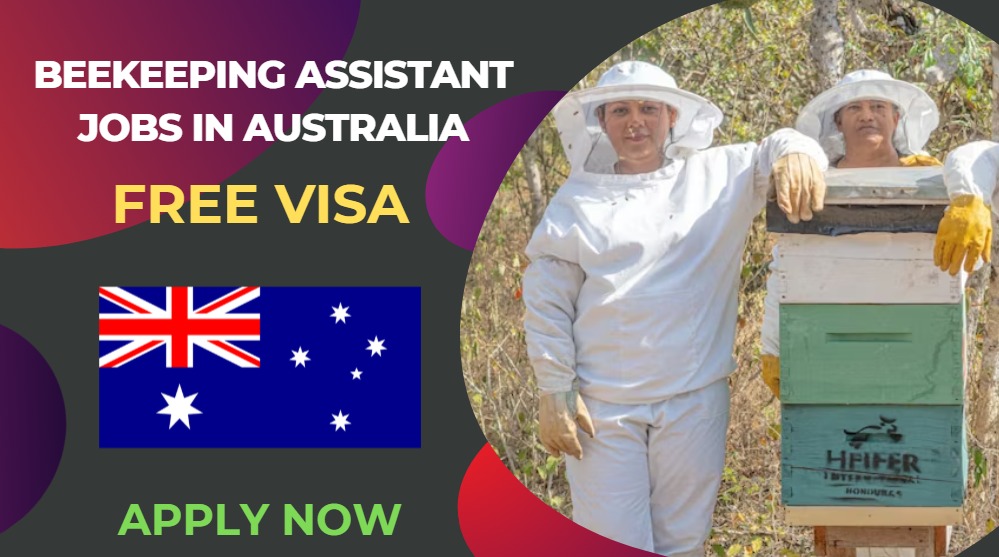
Beekeeping Assistant Jobs in Australia: When most people picture working in the Australian outdoors, they think of cattle stations, vineyards, or construction sites. But there is a quieter, more vital industry buzzing beneath the surface: beekeeping. And right now, Australia’s apiarists are desperately searching for a critical workforce—Beekeeping Assistants.
Forget the romantic image of a solitary beekeeper in a veil. Modern Australian beekeeping is a high-stakes, mobile agricultural operation. If you are looking for a job that combines travel, biology, mechanical know-how, and genuine environmental impact, this might be your perfect hive.
Table of Contents
Beekeeping Assistant Jobs in Australia
Why Australia? The Almond Factor
Australia is a beekeeping powerhouse, driven almost entirely by one crop: almonds. The almond orchards of the Sunraysia region (Victoria/NSW border) and the Riverina require over 250,000 hives every July to August for pollination. It is the largest managed pollination event in the world.
Outside of pollination season, bees travel the country chasing “honey flows” from Ironbark, Yellow Box, and Leatherwood trees. Beekeeping assistants are the crew that makes this national migration possible.
What Does a Beekeeping Assistant Actually Do?
Let’s clear up a myth. You will get stung (though suit technology has made it rare). But the job is less about handling bees and more about logistics and husbandry.
Typical daily duties include:
Hive manipulation: Lifting boxes (supers) weighing up to 30kg onto trucks or pallets.
Queen management: Caging, marking, and introducing new queens to maintain hive health.
Pest control: Monitoring and treating for Varroa mite (entry is strictly controlled in Australia), Small Hive Beetle, and Foulbrood disease.
Extraction work: In summer, you move to the “honey house” to uncap frames, spin extractors, and bottle product.
Driving: Most roles require a manual driver’s license and experience driving a ute with a trailer or a light truck.
The Seasonal Calendar:
Winter (June-August): Preparing hives for almond pollination. Feeding sugar syrup, repairing boxes.
Spring (September-November): Pollination contracts. Long days, high pressure, lifting hives onto orchards at night.
Summer (December-February): Honey extraction. Hot, sticky work in the shed.
Autumn (March-May): Breeding and feeding. Slower pace, maintenance.
The Visa Question: A Path for Backpackers
This is the most attractive part of the job. Beekeeping is classified as eligible for Specific Work on a Working Holiday Visa (Subclass 417 and 462).
Specifically, working as a Beekeeping Assistant counts towards the 88 days (or 179 days) of specified regional work required to apply for a second or third year visa.
Postcodes: You need to work in a regional area (anywhere outside major cities like Sydney, Melbourne, or Brisbane).
Evidence: Keep a timesheet and a diary. Ensure your employer provides a piece rate agreement if you are paid per hive.
However, a warning: Not all “bee jobs” qualify. The work must be directly related to apiculture (maintaining bees for commercial honey or pollination). Working in a honey packing shed without touching hives usually does not count.
The Hard Truth: It is Not a Hobby
Beekeeping is currently facing a labor crisis. Australians are leaving the industry due to physical demands, and they rely heavily on backpackers. Here is the reality of the job:
Weight: You will lift 30kg+ hundreds of times a day. Upper body strength is non-negotiable.
Heat: Working in a full bee suit in 40°C (104°F) heat is brutal.
Allergies: You must know if you are allergic to bee stings. EpiPens are mandatory on site.
Isolation: You will likely live in a caravan in a paddock. Wi-Fi is rare. It is perfect for savers, but terrible for social butterflies.
Pay: Award rate (under the Pastoral Award 2020) usually starts at around $24–$30 per hour for casual assistants, plus superannuation. Some pay “per hive” (piece rate) which can be higher if you are fast, but carries risk if the hive is cranky.
How to Get Hired
You cannot walk into a city office and find this job. You need to look where the bees are.
Top regions hiring assistants:
Cobram & Shepparton, VIC (Almond pollination hub)
Young & Tumbarumba, NSW (Canola and native forests)
Ovens Valley, VIC (Leatherwood honey)
Swan Valley & Manjimup, WA (Wildflower honey)
Where to apply:
Facebook Groups: “Australian Beekeeping Jobs”, “Backpacker Jobs Australia”, “Gumtree Rural Jobs.”
Harvest Trail: The Australian Government’s official harvest job site.
Cold calling: Look up “commercial apiarist” in a rural region and call them in May (pre-almond season). Do not email—call.
Recruitment agencies: AgLabour, Rimfire, or Rural Enterprises.
The Sweet Side
Why take a job that leaves you hot, tired, and occasionally poked by a needle?
Savings: Because you can’t spend money in the bush, backpackers often save $10,000–$15,000 in a 6-month season.
Experience: You will learn more about ecology and entomology in three months than a biology degree.
The group: Beekeeping crews are famously tight-knit. You work hard, eat together, and sleep under the stars.
The impact: Without you, Australian farmers wouldn’t have avocados, blueberries, or almonds. You are feeding the nation.
Beekeeping Assistant jobs in Australia are not for the faint of heart. They are dirty, heavy, and lonely. But for the right person—someone fit, mechanically minded, and eager to escape the backpacker party circuit—they offer a genuine career pathway, visa extension, and a front-row seat to one of nature’s most incredible industries.
So, pack a wide-brimmed hat, buy a pair of steel-capped boots, and get ready to join the hive. Just don’t forget to bring your sense of humor.
Disclaimer
This job information is shared for educational and informational purposes only. Any discussion of visa categories is based on general immigration laws and publicly available information.





Job, visa, salary, deadline and eligibility details can change. Check the employer or relevant government/official source before applying, paying money or making travel arrangements.
If you spot an outdated or inaccurate detail, please contact us with the article URL.