
Cattle Station Hand Jobs in Australia: If your job feels like a cage, and the only “stock” you manage is the office pantry, then a Cattle Station Hand role in the Australian outback might be the radical reset you are looking for.
Table of Contents
Cattle Station Hand Jobs in Australia
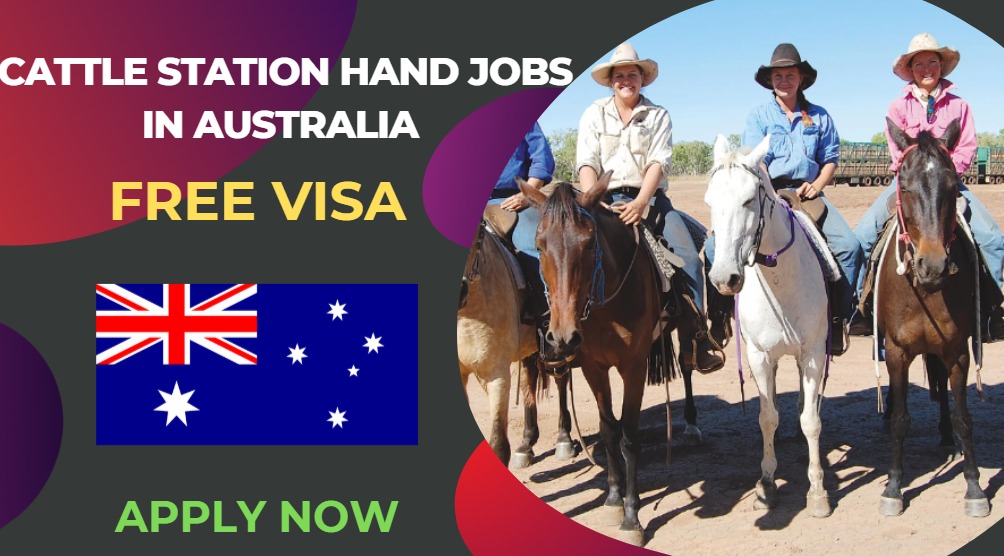
Australia’s cattle industry is a $15 billion powerhouse, but its engine runs on a rare breed of worker. From the red dust of the Kimberley to the floodplains of the Northern Territory, thousands of station hands are the unsung heroes keeping the nation fed. This is not a job for the faint-hearted—it is a lifestyle that demands grit, rewards resilience, and offers an authenticity you simply cannot find in a city.
What Does a Station Hand Actually Do?
Forget the romanticized Hollywood version of a cowboy singing on the range. The modern station hand is a mix of mechanic, vet, fencer, and data entry clerk.
Your day begins before sunrise. Specific duties include:
Mustering: Often via helicopter, dirt bike, or horse. You will draft, cull, and move thousands of head of cattle across vast distances.
Maintenance: The outback eats machinery. You will weld broken ploughs, fix leaking trough pumps, repair fences that have been trampled by wild brumbies, and service the Land Cruiser.
Animal Health: Administering vaccines, checking for ticks or buffalo fly, and assisting with calving.
Water runs: In the dry season, water is life. You will drive hundreds of kilometers a week just to check that bores and tanks are running.
The “Aussie” Setting: The Stations
A “station” in Australia is not a shed; it is a land holding the size of a small European country. Anna Creek Station in South Australia is the world’s largest cattle station, covering over 6 million acres.
You will live in quarters known as “dongas” (demountable buildings) or shearers’ quarters. Wi-Fi is often sporadic or non-existent. The nearest town might be an eight-hour round trip. For some, this isolation is terrifying; for others, it is the ultimate freedom.
The Pay Packet (2025/2026 Rates)
Money talks. Due to a chronic labor shortage in remote areas, wages for station hands have skyrocketed.
Entry-level/Junior Hand: $60,000 – $75,000 AUD per year (plus accommodation and meals).
Experienced Hand/Ringer: $80,000 – $100,000 AUD.
Head Stockman/Horse Trainer: $100,000 – $130,000+ AUD.
The Golden handcuff: Most stations offer a “live-in” package. Your rent, utilities, meat (from the station kill), and often a ute (truck) are provided. For a backpacker or young local, this means 90% of your wage goes straight into savings.
Who Is Hiring? (And Who Shouldn’t Apply)
You should apply if:
You are physically fit (lifting 20kg bags of feed repeatedly is standard).
You have a “no job is too small” attitude.
You can handle extreme heat (45°C/113°F in the shade).
You have a driver’s license (manual driving is mandatory).
You should NOT apply if:
You need daily therapy or constant digital stimulation.
You have a fear of spiders, snakes, or flies (the Australian Outback fly is a character in its own right).
You are allergic to hard work.
The Visa Lottery for Backpackers
For international travelers, this is critical. Cattle station work is classified as Specified Work for the Second and Third Year Working Holiday Visa (subclass 417 and 462).
To get your visa extension, you need 88 days of specified work in a regional area. However, caveat emptor: Not all cattle stations qualify. Ensure the property has an ABN registered in a eligible postcode. Many backpackers have been burnt by working three months on a beautiful station only to find the postcode was “urban” by one digit.
The Hidden Curriculum: What you actually learn
Beyond the pay cheque, station life teaches you skills you didn’t know you needed:
Competence: You will learn to fix a flat tire in 10 minutes while covered in red dust.
Silence: You learn to sit in absolute quiet and just be.
Community: Station crews become families. You eat together, work together, and play cards together. Loneliness is rare in a good crew.
How to Land the Job
Don’t just email a resume. Station managers are visual people who value character over credentials.
Target the Seasons: Mustering happens in Autumn (March-May) and Spring (August-October).
Go to the Pub: The best jobs are never advertised. Fly to Mt Isa, Kununurra, or Longreach and check the noticeboard at the local pub.
Join the Groups: Facebook groups like “Australian Outback Jobs – Station Hands & Ringers” are more effective than Seek.com.au.
Get your tickets: A valid First Aid certificate, RSA (for remote bar work combined with the job), and a HR (Heavy Rigid) truck license make you a unicorn candidate.
Working as a Cattle Station Hand is not a career path for everyone. It is dirty, exhausting, and isolating. But for those who take the leap, it is transformative.
You will trade your suit for a pair of RM Williams boots, your commute for a sunrise muster, and your office politics for the quiet loyalty of a good working dog. If you are looking for a job that fills your bank account while emptying your soul of modern stress, throw your swag in the back of the ute and head north.
Disclaimer
This job information is shared for educational and informational purposes only. Any discussion of visa categories is based on general immigration laws and publicly available information.