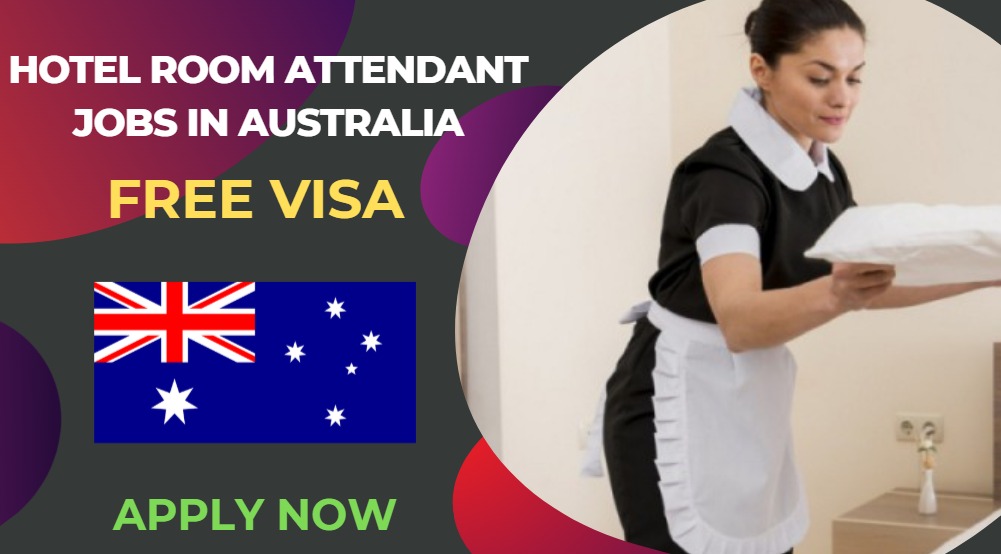
Hotel Room Attendant Jobs in Australia: When you walk into a sparkling hotel room in Sydney, Melbourne, or Cairns—the bed perfectly creased, the bathroom smelling of lemon myrtle, and not a single fingerprint on the mirror—you are witnessing the work of a Hotel Room Attendant. Often called “housekeeping” or “room stylists,” these professionals are the backbone of Australia’s booming tourism industry.
Table of Contents
Hotel Room Attendant Jobs in Australia
With Australia’s hospitality sector rebounding strongly post-pandemic and international travel back in full swing, the demand for dedicated room attendants is higher than it has been in years. But what does the job actually involve, and how do you land one of these roles?
What Does an Australian Hotel Room Attendant Actually Do?
While the title sounds simple, the role is physically demanding and detail-oriented. Daily tasks generally include:
Turnover cleans: Stripping beds, washing linens, making beds with hospital corners, vacuuming, dusting, and sanitizing bathrooms.
Restocking amenities: Replacing toiletries, coffee pods, tea bags, and mini-bar items according to brand standards.
Deep cleaning: Rotating tasks such as shampooing carpets, cleaning windows, and wiping down wardrobes.
Lost & found: Logging any items guests leave behind.
Reporting maintenance: Noting broken lights, leaky faucets, or damaged furniture.
Crucially, you must meet speed standards—most hotels require 25 to 35 minutes per standard room, and 45 to 60 minutes for a suite.
Where Are the Best Locations for Work?
Australia is a massive country, but room attendant jobs cluster where tourists go.
Sydney & Melbourne: High-end luxury hotels (Four Seasons, Crown, Shangri-La) offer stable hours and penalty rates. Competition is higher, but so are wages.
Brisbane & Gold Coast: Resort-style housekeeping. High volume during school holidays and major events (like the 2032 Olympics build-up).
Regional hotspots: Cairns (Great Barrier Reef), Uluru (Ayers Rock Resort), and ski towns like Thredbo or Falls Creek. These often include accommodation perks like subsidized dorms or shared staff housing—a massive bonus for backpackers.
Mining towns (e.g., Karratha, Port Hedland): Not glamorous, but the pay is exceptionally high for fly-in-fly-out (FIFO) housekeeping roles.
Pay, Conditions, and Awards (What You Legally Get)
Australian labour laws are strict. You do not work for tips alone.
Most hotel room attendants are covered by the Hospitality Industry General Award 2020. As of 2025, baseline expectations include:
Casual rate: Approximately $30–$35 AUD per hour (including casual loading).
Part-time/Full-time: Approximately $24–$28 AUD per hour.
Penalty rates: Time-and-a-half (150%) on Saturdays, double time (200%) on Sundays, and higher rates for public holidays.
Overtime: Any clean exceeding 8 hours in a day incurs overtime pay.
Note: Some boutique hotels use “flat rate” agreements, but these must still meet minimum award wages. Always check your payslip.
Who is hiring right now? Major employers include Accor, Marriott International, Hilton, Quest Apartment Hotels, and independent luxury lodges.
Who Usually Gets These Jobs? (Sponsorships vs. Working Holiday)
This is the most common question from foreigners.
Working Holiday Makers (Subclass 417 & 462): This is the primary workforce. Cleaning is an easy entry point. The job counts toward your specified work for a second or third year visa only if done in a regional postcode (e.g., not Sydney CBD, but yes to Katoomba or Launceston).
Student Visa holders: Allowed to work 48 hours per fortnight during semesters. Housekeeping managers love students for morning shifts (6 AM – 12 PM).
Employer Sponsorship (482 Visa): Extremely rare. Room attendant is not typically on the skilled occupation list unless it’s a high-end executive housekeeper role. Do not pay an agent promising a sponsorship for basic cleaning.
The Physical Reality: Are You Cut Out For It?
Let’s be blunt. This job destroys cheap sneakers and tests your back.
You will walk 15,000 to 20,000 steps per day.
You will push heavy trolleys (150kg+) loaded with sheets and chemicals.
You will squat, stretch, and bend repeatedly.
However, the upside? No emails. No Zoom calls. You finish your list and go home. Many travellers love the autonomy—put on a podcast, work alone, and watch the hours fly by.
How to Get Hired (Without Experience)
You do not need a diploma to make a bed. Here is the winning strategy:
Get an RSA (Responsible Service of Alcohol): Wait, for cleaning? No. But having one shows you understand Australian compliance culture. It costs $50 online.
Get a Police Check (National NPC): Hotels trust you with master keys and guest valuables. A clean record is mandatory.
Write a “Task-Oriented” CV: List speed, stamina, and attention to detail. Write: “Able to strip and remake 15 beds per shift. Experienced with industrial washers and commercial cleaning chemicals.”
Apply via specialized agencies: Hospoworld, Elite Staffing Solutions, and Programmed are the gatekeepers. Agencies fill shifts for large hotels. They often hire within 48 hours.
Walk in with a resume: Between 9:30 AM and 11:00 AM (after checkout, before lunch). Ask for the Executive Housekeeper. If they need someone, you might start the next morning.
The Verdict: Is It Worth It?
Yes, if:
You are a backpacker wanting to save $5,000+ AUD for a campervan.
You like working alone without micromanagement.
You want a job that keeps you physically fit.
No, if:
You have a bad back, knee issues, or chemical allergies.
You need a career ladder (supervisor roles exist but require 2+ years tenure).
You hate waking up at 5:30 AM (most shifts start at 7 AM sharp).
Final Tip
The golden rule of Australian housekeeping: Never ignore a “Do Not Disturb” sign. Knock three times, identify yourself loudly (“Housekeeping!”), and if no answer, move on. Guest privacy is sacred.
If you respect the rooms, the rooms will respect your paycheck. Australia is waiting—just bring a good pair of work gloves and a positive attitude toward folding fitted sheets.
Disclaimer
This job information is shared for educational and informational purposes only. Any discussion of visa categories is based on general immigration laws and publicly available information.





Job, visa, salary, deadline and eligibility details can change. Check the employer or relevant government/official source before applying, paying money or making travel arrangements.
If you spot an outdated or inaccurate detail, please contact us with the article URL.