
Kitchen Helper Jobs in Germany: Imagine working alongside skilled chefs in a bustling German kitchen, learning the craft of European cuisine while earning a solid wage and building a future in Europe‘s largest economy. For international workers, kitchen helper jobs in Germany offer a genuine pathway—not just to employment, but to a new life.
Table of Contents
Kitchen Helper Jobs in Germany
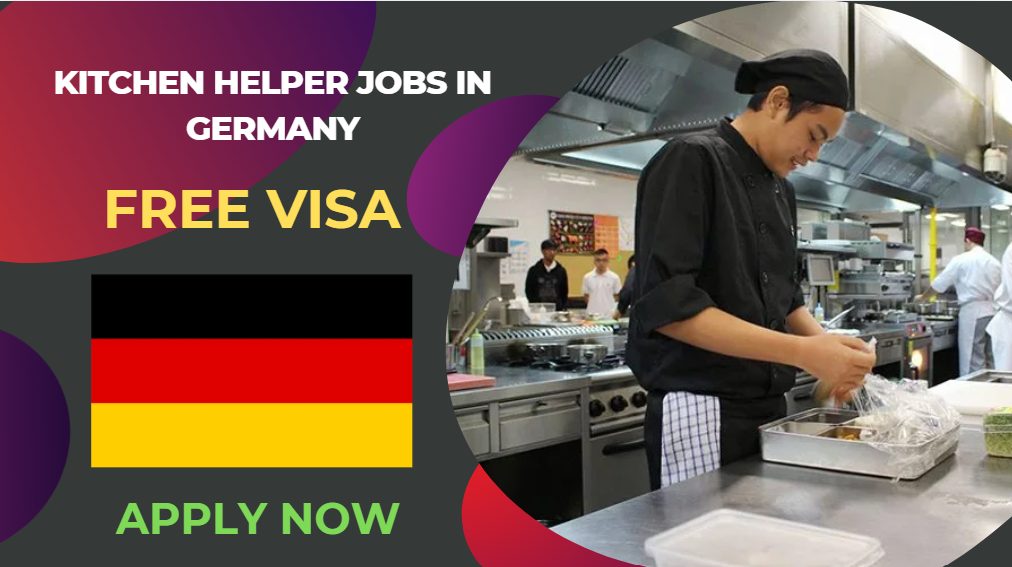
Germany’s hospitality industry is facing a critical labour shortage. Restaurants, hotels, and caterers are desperate for reliable kitchen staff, and they are increasingly looking abroad to fill these positions. This guide covers everything: what kitchen helpers earn (€1,800–€2,300+ monthly), which visa pathways work for entry-level roles, language requirements, and exactly how to land a kitchen helper job with a legal work permit.
What Is a Kitchen Helper in Germany? (Definition & SEO Keywords)
A kitchen helper (Küchenhilfe or Beikoch) is an entry-level kitchen worker who supports chefs with basic food preparation, cleaning, and organisation. Unlike specialised cooks, kitchen helpers do not need formal culinary qualifications—but they do need physical stamina, reliability, and a willingness to learn .
Other common titles in Germany:
-
Küchenhilfe (Kitchen Helper)
-
Beikoch (Assistant Cook)
-
Küchenaushilfe (Kitchen Assistant)
-
Spülkraft (Dishwasher – related role)
-
Vorbereitungskoch (Prep Cook – slightly more experienced)
What you are NOT: A trained chef (Koch), a sous chef, or a kitchen manager. Those roles require formal German vocational training (Ausbildung) or recognised qualifications .
Critical distinction: In Germany, “kitchen helper” is an unskilled or semi-skilled role. Unlike speciality cooks (e.g., Indian, Thai, Chinese cuisine), kitchen helpers do not qualify for the dedicated “speciality cook” visa, which requires 6+ years of experience . However, helpers can qualify through other visa pathways, including the new §19c(2) experience-based route for workers with 2+ years of experience .
Core Duties: What Kitchen Helpers Actually Do
Kitchen helper work is fast-paced, physical, and essential to every restaurant kitchen.
Typical Responsibilities:
| Task | Frequency | Details |
|---|---|---|
| Food preparation | Daily | Chopping vegetables, preparing ingredients, portioning, basic cooking tasks under supervision |
| Cleaning & sanitation | Throughout shift | Washing dishes, sanitising surfaces, cleaning kitchen equipment, waste management |
| Stock management | Daily | Checking inventory levels, organising storage, rotating stock (FIFO) |
| Assisting chefs | During service | Fetching ingredients, plating dishes, maintaining workspace organisation |
| Compliance | Ongoing | Following hygiene regulations (HACCP), maintaining safety protocols |
The Kitchen Helper’s Golden Rule: Clean as you go.
German kitchens value order and cleanliness. A messy workspace slows down service and creates safety hazards.
Kitchen Helper Workflow (Typical Day):
| Time | Activity |
|---|---|
| 9:00 AM | Arrival, uniform change, station setup |
| 9:30 AM – 12:00 PM | Food prep (chopping, portioning, basic cooking) |
| 12:00 PM – 3:00 PM | Lunch service support |
| 3:00 PM – 4:00 PM | Staff meal, cleanup, restocking |
| 4:00 PM – 6:00 PM | Afternoon prep for dinner service |
| 6:00 PM – 10:00 PM | Dinner service support |
| 10:00 PM – 10:30 PM | Close-down cleaning, waste disposal |
Why Germany Desperately Needs Foreign Kitchen Helpers (Market Demand)
Germany’s hospitality industry is facing a severe labour shortage. Restaurants are closing early or reducing service because they simply don’t have enough staff.
Hard data:
| Indicator | Statistic | Source |
|---|---|---|
| Hospitality labour shortage | Critical, thousands of unfilled positions | |
| Recognition delays | Affects skilled chefs; less so for helpers | |
| Foreign workforce in hospitality | Growing, with dedicated recruitment programmes |
The result: Employers are increasingly open to hiring internationally. Many are willing to provide job offers to candidates with proven experience, even without formal German qualifications .
Pay Rates for Kitchen Helpers in Germany (2026)
German kitchen helper wages are competitive, especially considering benefits like paid holidays, health insurance, and sometimes staff accommodation.
Monthly & Hourly Rates:
| Role | Monthly Gross (€) | Monthly Net (€, approx) | Notes |
|---|---|---|---|
| Entry-level kitchen helper | €1,800 – €2,000 | €1,300 – €1,500 | Basic duties, limited experience |
| Experienced kitchen helper | €2,000 – €2,300 | €1,500 – €1,700 | 1-2 years experience |
| Prep cook / Commis | €2,200 – €2,600 | €1,600 – €1,900 | More skilled duties |
| Plus shift bonuses | +25–50% | For nights, weekends, holidays |
Additional Benefits (Common):
| Benefit | Typical Value | Notes |
|---|---|---|
| Staff meals | Free | 1-2 meals per shift |
| Staff accommodation | Free or subsidised | Some hotels and resorts offer this |
| Paid annual leave | 20–30 days | Minimum 20 days by law |
| Health insurance | Covered | Mandatory, deducted from salary |
| Pension contributions | Employer pays half | |
| Christmas bonus (13th salary) | €1,000–€2,000 | Common in larger establishments |
| Overtime pay | 1.3x – 1.5x |
Realistic Monthly Budget (medium city):
| Expense | Cost (€) | Notes |
|---|---|---|
| Rent (shared room) | €400 – €600 | Leipzig, Dortmund, Hannover |
| Food (staff meals cover 1-2 shifts) | €100 – €200 | |
| Health insurance | ~€200 | Deducted from salary |
| Transport | €30 – €60 | Deutschlandticket available |
| Mobile | €15 – €25 | |
| Total expenses | €745 – €1,085 | |
| Monthly net earnings (experienced helper) | €1,600 – €1,800 | |
| Monthly savings | €500 – €1,000 | Excellent for entry-level |
Takeaway: A kitchen helper earning €1,800–€2,300 monthly can save €500–€1,000+ per month, especially when staff meals and subsidised accommodation are included .
Qualification Requirements for Kitchen Helper Visa Sponsorship
This is the most critical section for non-EU applicants. Good news: formal culinary qualifications are not required for kitchen helper roles. However, you do need to meet certain criteria.
For the Experience-Based Visa (§19c(2) AufenthG, §6 BeschV) – Best for Helpers
Germany introduced a new pathway in 2024 specifically for experienced workers without formal qualifications .
| Requirement | 2026 Details |
|---|---|
| Experience | At least 2 years of relevant professional experience within the last 5 years |
| Job offer | Concrete employment contract from a German employer |
| Salary | At least 45% of the annual contribution assessment ceiling (approx. €40,770 gross/year in 2024, adjusted for 2026) |
| Qualification | A foreign professional qualification recognised in your home country (minimum 2 years training) OR 2 years of documented experience |
| Language | Basic German (A1–A2) strongly recommended, sometimes required |
| BA approval | Required (Federal Employment Agency) |
How to prove your experience: Gather reference letters, employment contracts, pay stubs, and any training certificates. Translate them into German or English .
For the Opportunity Card (Chancenkarte) – For Job Seekers
If you don’t have a job offer yet, the Opportunity Card allows you to enter Germany to search for work .
| Feature | Details |
|---|---|
| Points needed | Minimum 6 |
| Work rights | Up to 10 hours/week while searching |
| Valid for | Up to 1 year |
| Points for | Professional experience (2+ years = 2-3 points), language (up to 3 points), age (under 35 = up to 2 points), connection to Germany (up to 1 point) |
| Pathway | Once you find a job, convert to a work visa |
For the EU Blue Card – Not Applicable
The EU Blue Card requires a university degree and a salary of at least €50,700/year (or €45,934 for shortage occupations) . Kitchen helpers do not qualify.
For Speciality Cook Visa – Not Applicable to Helpers
Germany has a dedicated visa for “speciality cooks” (e.g., Indian, Thai, Chinese cuisine), which requires 6+ years of experience and sometimes a cooking test . Kitchen helpers do not qualify for this route. Helper roles are less complex and do not require the same level of expertise or the same visa benefits.
For Unskilled Workers Without Experience – Very Difficult
If you have no formal training and less than 2 years of experience, your options are limited. General labourers typically do not qualify for a work visa unless they are from the EU or covered by specific bilateral agreements . The most realistic pathways are:
-
Vocational training visa (Ausbildung): If an employer offers you a training position as a cook (3-year programme), you can apply for a training visa .
-
Western Balkans Regulation: If you are a citizen of Albania, Bosnia, Kosovo, Montenegro, North Macedonia, or Serbia, you have simplified access .
Work Visas & Permits for Kitchen Helpers (Critical Section)
For EU Citizens (Polish, Romanian, French, etc.):
| Requirement | Status |
|---|---|
| Visa needed? | ❌ No |
| Work permit needed? | ❌ No |
| Registration required? | ✅ Yes – Anmeldung and Tax ID |
For Non-EU Citizens – Experience-Based Work Visa (§19c(2))
Requirements:
-
Job offer from a German employer (the employer does not need to be a “sponsor”; the job offer itself is the key)
-
At least 2 years of relevant experience within the last 5 years
-
Salary meeting the minimum threshold (~€40,770/year)
-
Basic German A1–A2
-
Federal Employment Agency (BA) approval (processed automatically via the visa application)
For Non-EU Citizens – Opportunity Card (Chancenkarte)
Requirements:
-
6+ points based on qualifications, experience, language, age
-
Proof of financial means (blocked account)
-
Health insurance
-
Valid for 1 year, allows job search and up to 10 hours/week work
For Non-EU Citizens – Vocational Training Visa (Ausbildung)
If you have no experience but an employer offers you a training position as a cook:
| Feature | Details |
|---|---|
| Duration | 3 years |
| Pay | Training wage (~€1,060–€1,260/month) |
| Language | Usually B1 German required |
| Pathway | After completion, can transition to skilled worker visa |
For Western Balkans Citizens (Albania, Bosnia, Kosovo, Montenegro, North Macedonia, Serbia):
| Feature | Details |
|---|---|
| Qualification required? | No |
| Visa pathway | Simplified work permit |
| Annual quota | 25,000 visas |
| Processing time | 4–12 weeks |
What Kitchen Helpers Do NOT Need:
-
Formal culinary degree (experience can substitute)
-
Recognition of qualifications (helpers are not regulated professions)
-
University degree
Language Requirements: Do You Need to Speak German?
Short answer: Basic German (A1–A2) is strongly recommended and may be required for some visa pathways.
| Level | Usefulness | Visa Requirement |
|---|---|---|
| A1 (Beginner) | Basic greetings, simple instructions | May be required for some work permits |
| A2 (Elementary) | Simple workplace conversations, basic safety instructions | Strongly recommended, improves chances |
| B1 (Intermediate) | Full workplace communication, customer interaction | Required for vocational training visa |
German You Should Learn (Minimum 50 Words):
| English | German | Pronounced |
|---|---|---|
| Good morning | Guten Morgen | GOO-ten MOR-gen |
| Thank you | Danke | DAN-keh |
| Yes / No | Ja / Nein | yah / nine |
| Kitchen | Küche | KOO-she |
| Chef | Koch | kokh |
| Knife | Messer | MESS-er |
| Cutting board | Schneidebrett | SHNY-deh-bret |
| Hot | Heiß | hiss |
| Cold | Kalt | kalt |
| Dish | Geschirr | geh-SHEER |
| To wash | Spülen | SHPOO-len |
Recommendation: Learn A2 German before applying. It significantly improves your visa chances and daily work integration .
How to Find Kitchen Helper Jobs with Visa Sponsorship (Actionable Steps)
Step 1: Determine Your Visa Pathway
-
EU citizens: Travel freely
-
Non-EU with 2+ years experience: Apply for §19c(2) experience-based visa
-
Non-EU without job offer: Consider Opportunity Card
-
Western Balkans citizens: Apply through Western Balkans Regulation
-
No experience: Vocational training visa (Ausbildung) – requires employer offer
Step 2: Prepare Your Documents
Essential for application :
-
Valid passport (at least 12 months validity)
-
Employment contract from German employer
-
Proof of work experience (reference letters, contracts, pay stubs – at least 2 years)
-
CV (German-style, with photo)
-
German language certificate (A1–A2 minimum)
-
Proof of health insurance
-
Birth certificate (certified, translated)
-
Police clearance certificate
Step 3: Find Job Opportunities
Job portals:
-
Make-it-in-Germany.com (official government portal)
-
Gastrojobs.de (hospitality-specific)
Search terms in German:
-
“Küchenhilfe” (Kitchen Helper)
-
“Beikoch” (Assistant Cook)
-
“Küchenaushilfe” (Kitchen Assistant)
Employers to target:
-
Hotel chains (many offer staff accommodation)
-
Large catering companies
-
Restaurants in tourist areas
-
Contract caterers (business canteens, hospitals, schools)
Step 4: Apply with German-Style Application
German CV requirements:
-
Lebenslauf (tabular CV)
-
Professional photo (still common in Germany)
-
Clear chronological work history
-
Language skills listed with CEFR levels
Step 5: Employer Submits ZAV Application (If Required)
For some visa types, the employer must submit an application to the Federal Employment Agency (ZAV). The employer should initiate this process.
Step 6: Apply for Visa at German Embassy
Once you have a job offer and all documents, apply for a national visa (category D) at the German embassy in your home country.
Visa fee: €75
Processing time: 8–16 weeks (sometimes longer)
Step 7: Travel to Germany and Complete Registration
After visa approval:
-
Travel to Germany
-
Register your address (Anmeldung) at the local Bürgeramt
-
Apply for residence permit at the local Ausländerbehörde
-
Start working
Sample Job Ads (Realistic – Visa Sponsorship Eligible)
Example 1: Kitchen Helper – General Role
Title: Küchenhilfe (m/w/d) – Vollzeit
Location: Germany (various)
Requirements:
-
Experience in kitchen work (1-2 years minimum)
-
Basic German (A2)
-
Team player, reliable, physically fit
-
Valid work permit for non-EU citizens (or willingness to obtain)
Pay: €2,000–€2,300 gross/month + staff meals + shift bonuses
Example 2: Commis de Cuisine (Slightly Higher Level)
Title: Commis de Cuisine / Küchenhilfe
Location: Germany
Requirements:
-
Experience in international cuisine
-
Willingness to learn
-
Ability to work in a team
-
Good hygiene practices
Pay: According to collective agreement + accommodation possible
Benefits: Permanent employment, social benefits, training opportunities
Example 3: Vocational Training as a Cook
Title: Ausbildung zum Koch / zur Köchin (m/w/d)
Location: Germany
Requirements:
-
Interest in cooking
-
Good German (B1 minimum)
-
Teamwork ability
-
Creativity and precision
Pay: €1,060–€1,260 gross/month during training
Duration: 3 years
Living as a Kitchen Helper in Germany: What to Expect
Typical Daily Schedule (Lunch/Dinner Service):
| Time | Activity |
|---|---|
| 9:00 AM | Wake up, prepare for shift |
| 10:00 AM – 12:00 PM | Food prep |
| 12:00 PM – 1:00 PM | Staff meal |
| 1:00 PM – 3:00 PM | Lunch service support |
| 3:00 PM – 5:00 PM | Quiet period – cleaning, restocking, afternoon prep |
| 5:00 PM – 6:00 PM | Staff meal |
| 6:00 PM – 10:00 PM | Dinner service support |
| 10:00 PM – 10:30 PM | Close-down cleaning |
| 10:30 PM | Finish shift |
Pros and Cons:
| Pros | Cons |
|---|---|
| Visa pathways exist for experienced workers | German A1–A2 required for most visas |
| Staff meals save money | Physically demanding (standing, lifting, fast-paced) |
| Accommodation sometimes provided | Evening and weekend work |
| Pathway to permanent residency | Entry-level without experience is difficult |
| No formal culinary degree needed | Competition for limited visa spots |
| WHV accessible for eligible countries |
Career Progression:
| Timeframe | Role | Pay (€/month net) | Requirements |
|---|---|---|---|
| 0–1 year | Kitchen helper | €1,300 – €1,500 | Basic experience |
| 1–2 years | Experienced helper | €1,500 – €1,700 | 2+ years documented |
| 2–3 years | Commis / Prep cook | €1,600 – €1,900 | Additional skills |
| 3 years | Enrol in vocational training (Ausbildung) | Training wage (€1,060–€1,260) | B1 German |
| 6+ years | Qualified cook | €2,000 – €2,800 | Recognised qualification |
Legal Traps for Kitchen Helper Applicants (Critical)
Red Flags (Walk away immediately):
| Red Flag | Why It’s a Problem |
|---|---|
| “Pay us €5,000 for visa sponsorship” | Illegal. German recruitment should be free or low-cost |
| “We will sponsor you without a job offer” | Impossible. A concrete job offer is mandatory |
| “No contract – we pay cash” | Illegal. No Social Security, no healthcare |
| “No experience needed, no German needed” | Untrue. You need documented experience for any visa |
| “We are a recruitment agency asking for upfront payment” | Scam. Be cautious with recruiters |
Your Legal Rights as a Kitchen Helper in Germany:
| Right | Details |
|---|---|
| Minimum wage | €12.82/hour (2026). Actual kitchen helper pay is higher |
| Maximum working hours | 40 hours/week (overtime paid) |
| Paid annual leave | 20 days minimum; 30 days common |
| Paid public holidays | 9–12 days/year – if you work, double pay |
| Sick leave | Paid by health insurance (6 weeks full pay from employer) |
| Health insurance | Mandatory – covered by your employment |
| Pension contributions | Automatically deducted – contributes to state pension |
| Written contract | Must be provided before starting work |
What to Do If You Are Exploited:
-
Labour Inspectorate (Zoll): Customs office handles illegal employment
-
Trade union: Ver.di (services) – helps foreign workers for free
-
Your embassy
How to Start Today (Checklist)
If you are an EU citizen:
-
Get your passport
-
Book a flight to Berlin, Munich, Frankfurt, or Hamburg
-
Register your address (Anmeldung) at Bürgeramt
-
Apply to restaurants and hotels directly
-
Start work within 1-2 weeks
If you have a Working Holiday Visa (Australia, Canada, NZ, Japan, South Korea):
-
Apply for WHV from home country (2–4 months processing)
-
Once approved, book flight to Germany
-
Register your address (Anmeldung) after arrival
-
Apply to kitchen helper jobs
-
Start working within 1-2 weeks
If you have 2+ years of kitchen experience (non-EU):
-
Document your work experience (reference letters, contracts, pay stubs)
-
Learn basic German (A2)
-
Apply for §19c(2) experience-based visa
-
Once approved, travel to Germany
-
Start working
If you are from Western Balkans:
-
Find a job offer
-
Apply through Western Balkans Regulation at German embassy
-
Once approved, travel to Germany
-
Start working
If you have no experience but want training:
-
Find an employer offering Ausbildung (vocational training) as a cook
-
Learn German (B1 minimum)
-
Apply for vocational training visa
-
Complete 3-year training programme
-
Transition to skilled worker visa
Final Verdict: Is Kitchen Helper Work in Germany Worth It?
Yes – for EU citizens, WHV holders, and non-EU citizens with 2+ years of experience. Germany offers competitive pay, strong benefits, and multiple legal visa pathways.
If you are:
-
An EU citizen (Polish, Romanian, French, etc.)
-
An Australian, Canadian, or New Zealander with a WHV
-
A non-EU citizen with 2+ years of documented kitchen experience (§19c(2) visa)
-
A citizen of Western Balkans (fastest pathway)
-
Someone who is physically fit, reliable, and willing to learn basic German
-
Looking to save €500–€1,000+ per month
…then kitchen helper work is one of the most accessible entry-level jobs in Europe.
If you are:
-
A UK or US citizen without a WHV (§19c(2) is your option – requires experience)
-
Someone who cannot stand for 8 hours or work evenings/weekends
-
Someone unwilling to learn basic German (A1–A2 is essential)
-
Someone with no documented experience (unlikely to qualify for a visa)
…then kitchen helper work may not be for you.
One final truth: Kitchen work is hard. You will be on your feet, under pressure, and working while others are relaxing. But you will also learn skills that last a lifetime, earn a living wage, and build a future in Europe’s strongest economy. The restaurants are hiring. Your career starts now. Viel Glück! (Good luck!)
Disclaimer
This job information is shared for educational and informational purposes only. Any discussion of visa categories is based on general immigration laws and publicly available information.
Kitchen Helper Jobs in Germany: Practical Preparation
A kitchen helper may assist with ingredient preparation, washing dishes, cleaning work areas, receiving supplies, basic food handling, and supporting cooks. Duties depend on the restaurant, hotel, catering company, or institutional kitchen. Ask about shift times, weekend work, breaks, uniforms, meals, and the exact tasks expected.
Applicants should prepare a truthful CV and mention relevant food-service, cleaning, teamwork, and customer-service experience. German-language ability can be useful in many workplaces, but the required level varies by employer.
Employment and visa checks
For work in Germany, verify the legal employment route and current requirements through official German government sources. A vacancy cannot by itself grant work authorization. Check the employer, contract, salary, working hours, accommodation terms, and deductions before paying or travelling.
Workplace readiness
Food-service work requires hygiene, punctuality, safe equipment handling, and the ability to follow instructions. Ask whether food-safety training is provided and what protective equipment is required.
nn
Helpful Smart Gyan Share Resources
n
For additional site information, editorial details and privacy information, see About Smart Gyan Share.
nn
Helpful Smart Gyan Share Resources
n
For additional site information, editorial details and privacy information, see Contact Smart Gyan Share.
nn
Helpful Smart Gyan Share Resources
n
For additional site information, editorial details and privacy information, see Privacy Policy.