Roofing Helper Jobs in The USA: The American construction industry is booming, and at the heart of every successful roofing project is a reliable team. For foreign workers looking for a stable, well-paying entry point into the U.S. job market, Roofing Helper positions are one of the most accessible and rewarding opportunities available today.
With a severe labor shortage in the construction trades, many U.S. employers are actively recruiting international applicants. Here is everything you need to know to get started.
Table of Contents
Roofing Helper Jobs in the USA
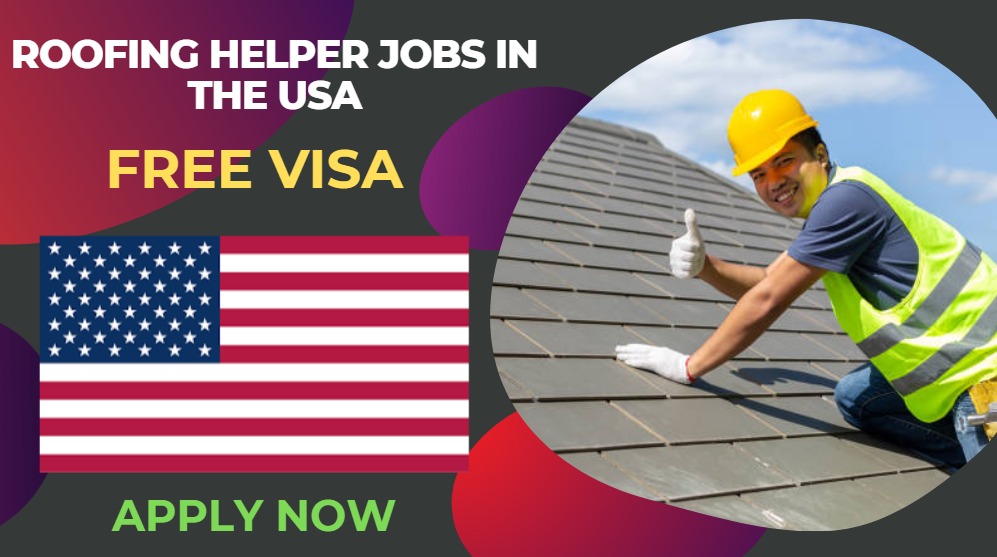
Why Roofing Helper Jobs Are Ideal for Foreign Workers
Unlike corporate roles that require advanced degrees and fluent English, roofing helper positions focus on physical ability, reliability, and a strong work ethic.
No Advanced Degree Needed: A high school diploma is typically the only educational requirement.
Learn While You Earn: You receive on-the-job training (OJT). No prior experience? No problem. You will learn to handle materials, operate lifts, and assist with installations.
Above-Average Entry Pay: Roofing helpers in the USA earn between $15 and $22 per hour ($600–$900+ per week), often with overtime pay (1.5x hourly rate) for over 40 hours.
Path to Sponsorship: Many large roofing companies are registered with the U.S. Department of Labor to sponsor H-2B visas (non-agricultural temporary workers) or H-2A for seasonal peaks.
What Does a Roofing Helper Do?
Your daily tasks will be physical but straightforward. You will work alongside experienced roofers to:
Load and unload roofing materials (shingles, metal sheets, tar, insulation).
Set up ladders, scaffolding, and safety nets.
Remove old roofing from tear-off projects.
Measure and cut materials to size.
Keep the job site clean and hazard-free.
Pass tools and supplies to the lead roofer.
Safety is #1: U.S. law requires employers to provide safety training and equipment (hard hats, harnesses, non-slip boots).
Visa Options for Foreign Roofing Helpers
You cannot simply fly to the USA and start working. You need a valid work visa. Here are the most common pathways:
| Visa Type | Best For | Duration |
|---|---|---|
| H-2B Visa | Seasonal or peak-load construction work. Most common for roofers. | Up to 1 year (renewable). |
| J-1 Visa (Summer Work Travel) | Students or recent graduates (limited roofing roles). | 3–4 months. |
| EB-3 (Unskilled) | Permanent residency (green card). Long process, but leads to citizenship. | Permanent. |
Note: Never accept a job that asks you to pay for the visa or come on a tourist visa (B1/B2) to work illegally.
Top U.S. States Hiring Foreign Roofing Helpers Now
Demand is highest in states with extreme weather (hail, snow, hurricanes) and rapid construction growth:
Texas – Hot climate; constant roof replacement. H-2B sponsors common.
Florida – Hurricane repairs create year-round work.
California – High wages ($20–25/hr), but high cost of living.
Illinois / Ohio – Snow and ice damage create spring/summer rushes.
Colorado – Hail belt; very high demand for helpers.
How to Apply: Step-by-Step for Foreign Workers
Follow these steps to secure a job legally:
Step 1: Prepare Your “Resume” (CV)
Keep it simple. List:
Your full name and contact info.
Any construction, farming, or factory labor experience (lifting, tool use).
A clear statement: “Willing to relocate and legally authorized to work with visa sponsorship.”
Three references (past supervisors, if possible).
Step 2: Search for H-2B Sponsors
Use these specific search terms on Google or LinkedIn:
*”H-2B roofing helper jobs USA”*
“Roofing labor sponsor visa foreign workers”
Check SeasonalJobs.dol.gov (official U.S. government list).
Step 3: Apply Directly to Large Roofing Contractors
Target companies like:
Tecta America (national)
Baker Roofing Company (Southeast)
Flynn Group of Companies (North & Midwest)
Centimark Corporation (nationwide commercial roofing)
Send your resume and a short cover letter stating you need H-2B sponsorship.
Step 4: The Interview & Offer
If selected, you will have a video interview. Be honest about your physical fitness. Once hired, your employer files Form I-129 with USCIS. You then apply for the visa at a U.S. embassy in your home country.
Wages, Housing, and Worker Rights
Legally protected rights for foreign roofers in the USA:
Minimum wage (federal $7.25, but most states are $12–15+).
Overtime pay after 40 hours.
Free required safety training.
Employers offering H-2B must provide free or low-cost housing and transportation from your home country (or reimburse you).
Warning: Scams exist. Legitimate employers never ask for “visa processing fees” from you. The employer pays all government filing fees.
Pros and Cons – Real Talk
Pros:
High cash flow with overtime.
No student debt required.
Pathway to permanent residency via EB-3.
Learn a trade that exists everywhere.
Cons:
Very physically demanding (heat, heavy lifting, heights).
Seasonal work (possible winter layoffs unless you travel south).
English required for safety communication (basic level okay).
Final Call: Apply Now
The U.S. roofing industry is desperate for reliable, hardworking helpers. If you are fit, punctual, and ready to learn, American contractors want to hire you.
Your action items today:
Update your one-page labor resume.
Search “H-2B roofing helper jobs 2025” on Google.
Email 10–20 roofing companies directly.
Don’t wait. The H-2B visa cap fills quickly (usually within the first two weeks of April each year). Spring and summer are peak hiring seasons.
Start your American dream from the rooftop up. Apply for a Roofing Helper job today.
Disclaimer
This job information is shared for educational and informational purposes only.
Any discussion of visa categories is based on general immigration laws and publicly available information





Job, visa, salary, deadline and eligibility details can change. Check the employer or relevant government/official source before applying, paying money or making travel arrangements.
If you spot an outdated or inaccurate detail, please contact us with the article URL.





How are you doing today